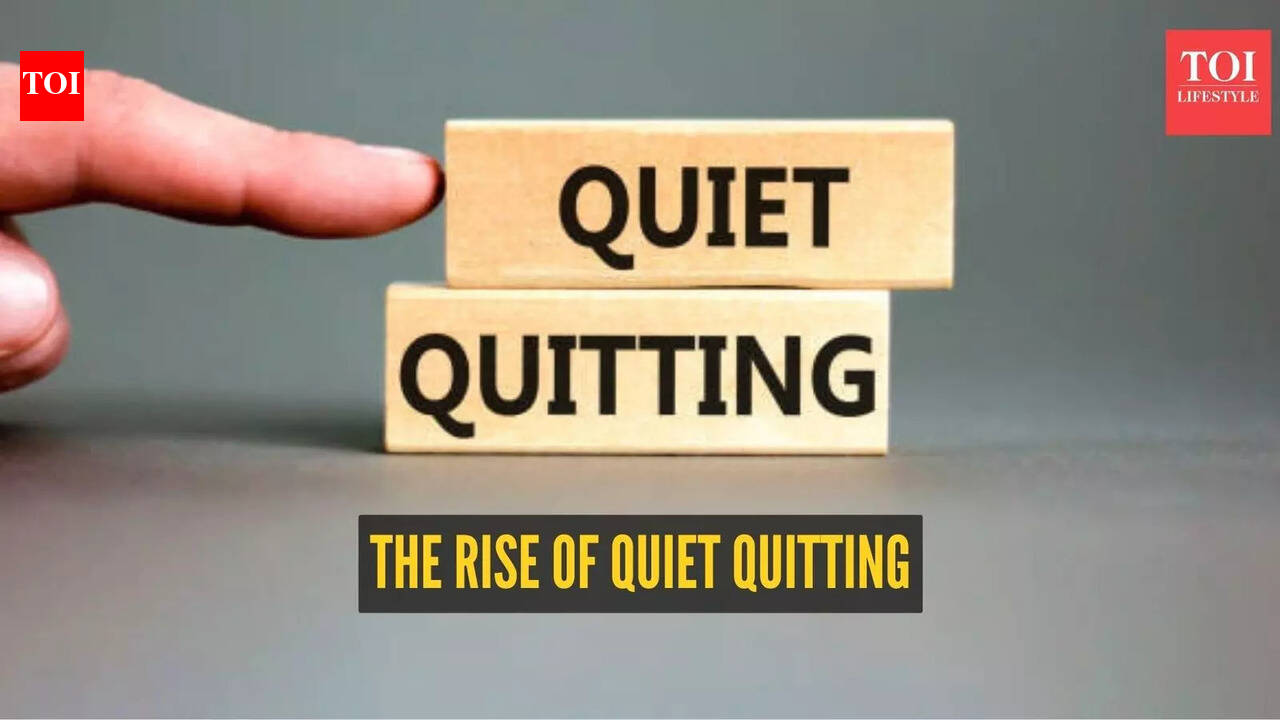
For the past few years, workplace conversations have been dominated by two words: quiet quitting. You’ve probably heard them everywhere. Social media. Podcasts. Office gossip. But what does it really mean? Sanjay Desai, author, entrepreneur, and Founder & CEO of ConsciousLeap, explains it simply. Quiet quitting isn’t about employees actually resigning. It’s about them mentally stepping back while still staying on payroll. They do what’s required. Nothing more. They complete their assigned tasks. They log off on time. They don’t volunteer for extra projects. They don’t reply to emails at midnight. They skip optional team hangouts. They show up – but only just enough. And while some leaders see this as laziness or entitlement, Desai suggests it’s often something else.
Coping mechanism?
For many employees, quiet quitting is a coping mechanism. It shows up when people feel stretched too thin. When management expects constant output but offers little appreciation. When “going above and beyond” quietly becomes the baseline expectation. Over time, people protect themselves by drawing a line. No drama. No announcement. Just a quiet recalibration. There’s also another side to it. High performers sometimes stay in their roles while scanning for growth elsewhere. They’ll continue doing their job well, but emotionally, they’ve already begun to detach. The moment a better opportunity appears, they’re gone.

And then there’s what Desai calls the social contagion effect. When a few team members pull back, others notice. The unspoken rules shift. Suddenly, staying late doesn’t feel mandatory anymore. The team culture slowly changes. This shift is especially visible among younger workers. Gen Z and younger Millennials are often at the center of the quiet quitting conversation. They’re more vocal about boundaries. More open about mental health. More unwilling to romanticize burnout. They value work-life balance. Independence. Emotional wellbeing. So when work starts to threaten those things, they respond by limiting how much of themselves they give. Not because they don’t care. But because they refuse to let work consume everything else. Unlike previous generations, many younger employees don’t see workaholic culture as a badge of honor. They see it as unsustainable. Hybrid and remote work have added another layer to this. Emotional connections between managers and employees aren’t as automatic as they once were. Meanwhile, companies are still trying to operate with systems built for a different era. Gen Z grew up with digital tools and close parental involvement. They’re comfortable navigating multiple identities – professional, personal, creative – at once. For them, home and work can coexist, but that doesn’t mean one should dominate the other. And just when the corporate world thought it had figured out quiet quitting, another shift began.
Job hugging
Achal Khanna, CEO of SHRM India, Asia Pacific & MENA, believes the conversation is evolving. If quiet quitting was about pulling back, 2026 is revealing something different.She calls it “job hugging.” After years of the Great Resignation, sudden exits, and restless job hopping, many employees are now holding onto their roles more tightly than before. Economic uncertainty, AI disruption, and global instability have changed the mood. The excitement of chasing something new has been replaced by the comfort of something familiar. People aren’t just staying for a paycheck. They’re staying because stability feels valuable. Predictable. Safe. But Khanna warns leaders not to misread this shift. Job hugging can look like loyalty. But sometimes, it’s fear. If employees cling to their roles simply because they’re afraid of the unknown, companies may trade one problem for another. Instead of high turnover, they risk stagnation. A workforce that stays physically present but mentally stuck. That’s not progress. The real challenge for leaders now is subtle. If people are choosing to stay, that choice should feel meaningful. Growth-driven. Intentional. Not just a hedge against uncertainty. Khanna describes this phase as a more mature psychological contract between employer and employee. Workers are cautious, yes. But they’re also watching closely. They’re asking: If I’m committing to you, what are you offering in return? This moment presents an opportunity. Organizations can rebuild trust. Strengthen internal mobility. Have honest “stay conversations” instead of waiting for exit interviews. They can create environments where staying feels like moving forward, not standing still. If quiet quitting exposed cracks in work culture, job hugging exposes something deeper – a workforce looking for security, clarity, and purpose in an unpredictable world. And maybe that’s the real takeaway. Today’s work culture isn’t just about effort levels or resignation trends. It’s about balance. About recognition. About designing workplaces where boundaries aren’t punished and loyalty isn’t taken for granted.

Employees are no longer blindly overcommitting. They’re more aware. More cautious. Sometimes more guarded. But they’re also open to staying – if staying feels worth it. The question for companies isn’t whether quiet quitting is happening. It’s whether they’re building workplaces people actually want to hug back.