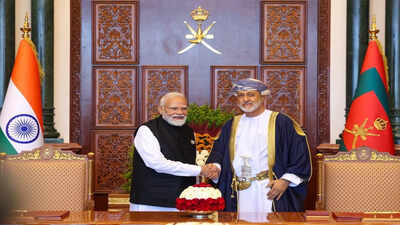
Middle East chaos has kept the crucial Strait of Hormuz squeezed for over three months now, disrupting one of the world’s busiest energy corridors, sending ripples across nations. But amid the chaos, India may have quietly found a Plan B — Oman.India’s free trade agreement with Oman, which comes into effect on June 1, could help keep trade and energy supplies flowing when the Gulf region hits a rough patch, according to the Global Trade Research Initiative (GTRI).While the trade gains from the Comprehensive Economic Partnership Agreement (CEPA) may be modest due to Oman’s relatively small market, its location could make it a valuable gateway for India when traditional Gulf shipping routes come under pressure.
More than just a trade pact
Oman, with a population of 55 lakh and a GDP of around $110 billion, is not among India’s largest export destinations. However, unlike several Gulf economies that depend heavily on the Strait of Hormuz for maritime access, large parts of Oman’s coastline are located along the Arabian Sea and the Gulf of Oman.“The trade pact with Oman holds strategic significance for India, as much of Muscat’s coastline lies outside the Strait of Hormuz, unlike other Gulf nations, enabling it to remain a reliable trade and energy gateway for India even during regional conflicts, disruptions or geopolitical instability,” GTRI stated.The think tank said that the agreement should be viewed not only through the lens of commerce but also as a step towards strengthening India’s long-term energy and economic security.Explaining the significance of Oman’s location, GTRI founder Ajay Srivastava said that ports such as Salalah and Duqm remain accessible even when movement through the Strait of Hormuz is affected.“Unlike most Gulf countries, which rely on shipping through the Strait of Hormuz, much of Oman’s coastline is located outside the Strait, directly on the Arabian Sea and the Gulf of Oman. This allows major ports such as Port of Salalah and Port of Duqm to remain accessible even when traffic through the Strait is disrupted.“As a result, Oman can continue serving as a reliable trade and energy gateway during periods of conflict or instability in the Gulf,” Srivastava said.
Trade trends
According to GTRI, recent trade trends have highlighted this advantage. As trade with major Gulf economies weakened, India’s imports from those countries fell from around $15 billion in April 2025 to $9.8 billion in April 2026. Exports to the region also declined, dropping from $4.4 billion to $2.7 billion.Oman emerged as an exception during this period. Imports from the country rose sharply by 246.4%, increasing from $430 million to nearly $1.5 billion, supported by higher imports of crude oil and urea. Exports from India to Oman registered a comparatively smaller decline of 10.3%.“The experience shows that Oman can act as a dependable alternative trade and energy gateway for India when the Strait of Hormuz becomes risky or congested,” he said.The US-Iran war has disrupted shipping through the Strait of Hormuz, a route that carries around one-fifth of global daily oil consumption and a quarter of worldwide seaborne oil trade. The disruption has affected energy supplies reaching India from Saudi Arabia, Qatar and the UAE, while also pushing up crude oil prices.
India-Oman trade pact — What’s in store for India?
Under the agreement, Oman will provide immediate duty-free access on around 98% of its tariff lines, covering approximately 99% of India’s exports by value.Indian exports to Oman were valued at about $4 billion in fiscal 2026. The export basket was led by refined petroleum products, including petrol worth $781 million and naphtha worth $746 million. Other major exports included calcined alumina, iron and steel products, machinery and rice.Srivastava said more than 80% of Indian products were already entering Oman at average tariff rates of about 5%, though some goods continued to face duties of up to 100%.“Their elimination is expected to improve the competitiveness of Indian goods in the Omani market, though export growth will inevitably be constrained by the country’s relatively small population and market size,” he said.
What’s in it for Oman?
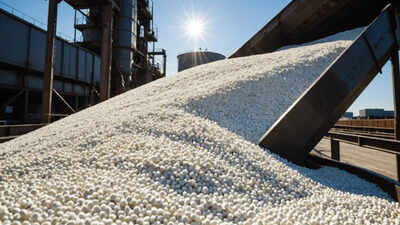
For Oman, the agreement is expected to reinforce its existing role as a supplier of energy products, fertilisers and industrial raw materials to India.India imported goods worth $7.2 billion from Oman during fiscal 2026, with crude oil accounting for $1.6 billion, liquefied natural gas for $1.2 billion and fertilisers for $843 million. Imports also included methanol worth $465 million and ammonia worth $424 million.India, in turn, will reduce or eliminate tariffs on nearly 78% of its tariff lines under the CEPA.“The CEPA therefore strengthens a relationship that is as much about securing reliable supplies of energy and industrial inputs as it is about expanding bilateral trade,” he said.The agreement, signed on December 18, 2025, will be India’s fifth free trade agreement to be implemented in the last five years and the 15th such pact overall.