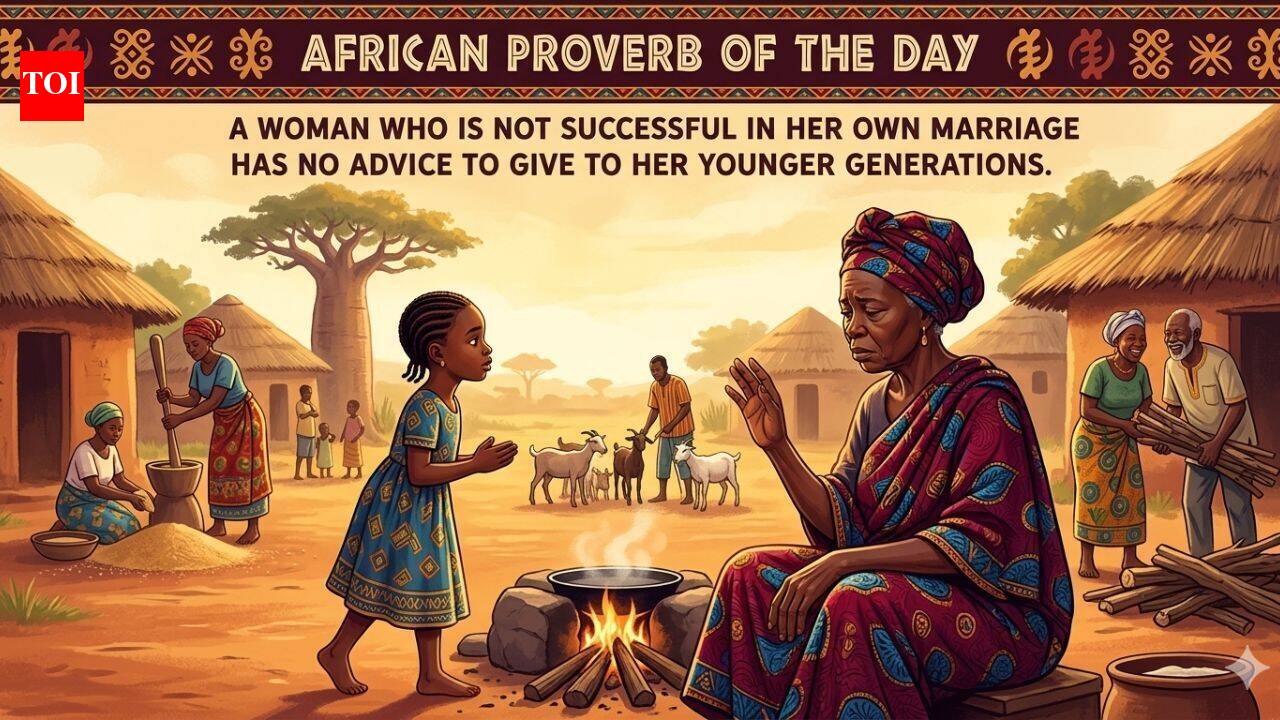
Think about the last time someone gave you advice you actually trusted. Chances are it was not the loudest person in the room. It was someone whose own life quietly backed up their words. That instinct, to listen to people who have walked the path before pointing the way, sits right at the centre of this old proverb. It is blunt, almost harsh. It says that a woman whose own marriage has fallen apart has no business handing out marriage advice to the young. Fair or not, it forces a question most of us have felt but rarely say out loud. Who has really earned the right to teach?
African proverb of the day
“A woman who is not successful in her own marriage has no advice to give to her younger generations.”
What is the meaning of this African proverb
On the surface the meaning is simple. If your own marriage did not work, why should the younger ones trust your guidance on theirs?The logic underneath is older than the proverb itself. We tend to believe people whose lives prove their words. You would rather learn cooking from someone whose food you have tasted and loved. You would trust money advice from a person who actually built something, not someone who lost it all. The proverb applies that same test to marriage. Live a strong, lasting one, the thinking goes, and your advice carries real weight. Watch your own fall apart, and your words ring a little hollow.So at its core, the saying is about something we all understand. Example speaks louder than instruction. People believe what you have done far more than what you tell them to do.
Can someone learn more from a failed marriage than a successful one
Here is where the proverb gets uncomfortable, and honestly, where it deserves some push back.Marriages fail for a hundred reasons, and plenty of them have nothing to do with the woman being blamed. A partner can lie, drink, cheat or simply leave. Some marriages end because one person finally found the courage to walk away from cruelty. Others fade for reasons no one could have fixed. To tell every one of these women that they now have nothing useful to say feels less like wisdom and more like a slammed door.And think about who often gives the best advice. It is frequently the person who got burned. The friend who lost the marriage, sat in the wreckage, and worked out exactly where it went wrong. That woman may understand love far more clearly than someone whose easy, lucky marriage never tested her at all. Pain is a hard teacher, but it is a thorough one.There is also the obvious thing. The proverb points only at women, as if the success of a marriage rested on her shoulders alone. That says a lot about the world it was born into. A fairer version would aim the same lesson at everyone, husbands included, and at anyone who offers advice on a life they have not really lived.It is worth remembering, too, that older generations did not always have the choice to leave. In many times and places a woman was expected to stay no matter what, and a marriage that merely lasted was counted a success. By that narrow measure, plenty of unhappy homes looked fine from the outside, while the women trapped inside them were the very people best placed to warn the young. The proverb quietly assumes that lasting equals good. Real life is rarely that tidy.So no, the proverb is not the whole truth. But it is not empty either. The trick is keeping the good in it and dropping the cruelty.
The part worth holding onto
Strip away the harshness and a solid, useful idea remains.The proverb is really warning against advice that does not match a person’s actual life. We have all met someone who lectures everyone on relationships while their own is quietly falling to pieces. That gap between what people preach and how they live is the thing the proverb is really sneering at. And on that point, it has a fair case.The lesson, then, is not “stay silent if you failed.” It is closer to this. Let your life and your words line up. If you want the young to take you seriously, give them more than slogans. Give them honesty, and give them an example worth following, even if part of that example is what you learned the hard way.
How to use this wisdom in your own life
You do not have to be married, or a woman, or Nigerian, to get something out of this. The idea reaches into almost any corner of life where people give and take advice.
- Before you hand someone advice, quietly check whether you are living it yourself. You do not need to be perfect, but you should at least be trying. People copy what you do long before they listen to what you say.
- When you receive advice, look at the life behind it. Is this person actually walking the path they are describing, or just talking about the view?
- Do not write off people whose lives got messy. Often the one who stumbled understands the road better than the one who never tripped at all.
- If your own marriage or relationship has been through real pain, do not bury that story. Told honestly, your mistakes can teach a young person far more than any tidy success ever could.
Other sayings that carry the same idea
This proverb is one of many across the world that ask your actions to back up your words.
- “Practice what you preach.” The plainest version of the same rule. Do not tell others to do what you will not do yourself.
- “A tree is known by its fruit.” Another saying from the same Nigerian collection. People judge your wisdom by the results it produces, not the speeches you make.
- “Physician, heal thyself.” An old line reminding the expert to sort out their own life before fixing everyone else’s.
Different cultures, same nagging point. Words are cheap. A life that proves them is not.
A final thought
Read carelessly, this proverb sounds like a way to shame women who have already suffered enough. Read carefully, it is asking a question worth keeping. Does your life back up your advice?The kindest way to honour it is to hold on to that question and let go of the judgement. A woman whose marriage failed has not lost her wisdom. If anything, she may have earned more of it. What the proverb gets right is simpler and gentler than it first sounds. The advice we trust most does not come from people with perfect lives. It comes from people who are honest about their real ones.