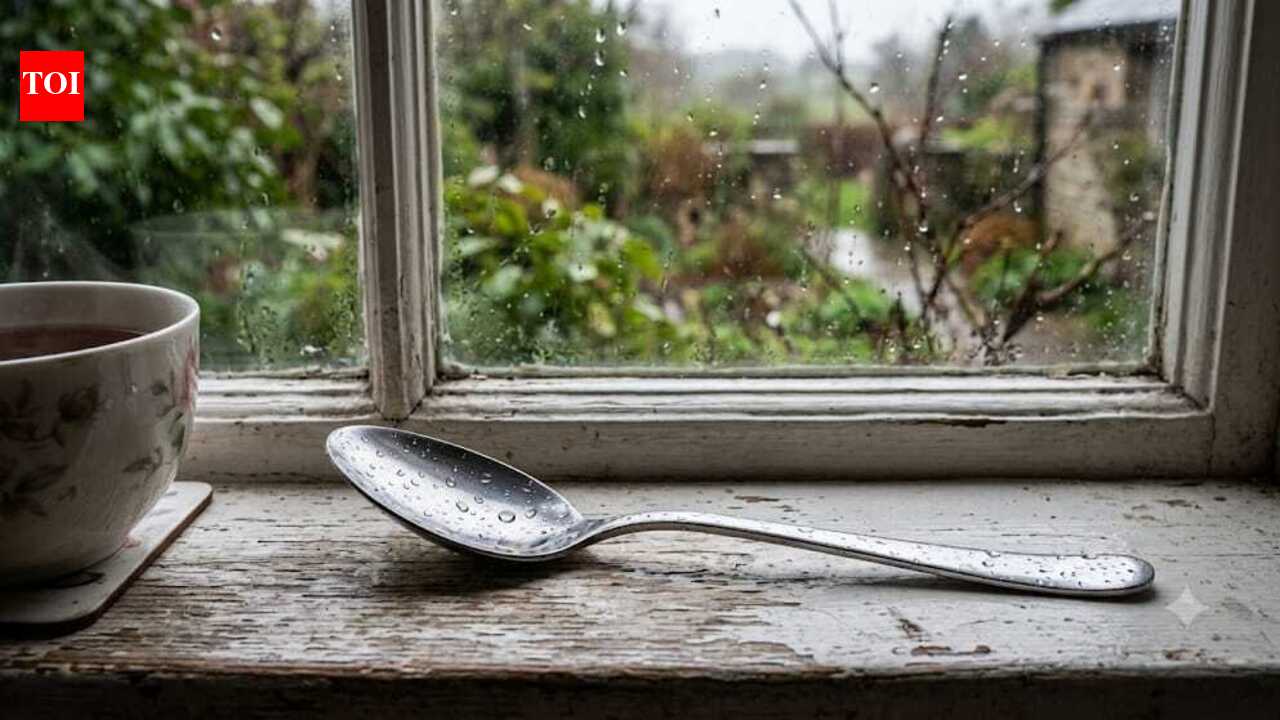

Condensation on windows is a common problem in many homes, especially during colder months when warm indoor air meets cold glass. While it may seem like nothing more than a nuisance, excess moisture can encourage mould growth, damage window frames and affect indoor air quality over time. In recent months, an unusual home hack has been attracting attention online: placing a metal spoon on the windowsill overnight. At first glance, it sounds like another old wives’ tale, but the idea is actually based on a simple scientific principle. The metal spoon can act as a cooler surface that attracts condensation before it forms across the glass. Although it isn’t a permanent solution, the trick has sparked curiosity for its simplicity and the science behind how it works.
Why do people put a metal spoon in the window
It is quite easy to understand. You just place a stainless-steel spoon near the edge of the window frame such that the handle end faces indoors while the bowl portion faces outdoors. The reason is that metal is a better conductor of heat than glass.As warm, humid indoor air comes into contact with the colder spoon, water vapour condenses on the metal first instead of forming droplets across the glass. Gravity then causes much of that moisture to drip away, leaving less condensation on the window itself. According to Tom’s Guide, this can help reduce the damp patches that often appear around windows during winter, although it is not a complete solution for humidity problems.
Does the spoon trick really reduce window condensation
The science behind the trick is genuine, but its effect is limited. Condensation forms whenever warm, moisture-laden air touches a cold surface. Since metal has much higher thermal conductivity than glass, the spoon becomes a convenient “cold spot” where some of the water vapour condenses first.However, experts stress that the spoon does not eliminate excess humidity inside a home. If indoor moisture levels remain high because of poor ventilation, cooking, drying clothes indoors or hot showers, condensation will continue forming elsewhere. The spoon simply redirects a small portion of the moisture rather than removing it altogether.
Why controlling window condensation matters
Excessive condensation is much more than a mere nuisance, as excess water vapour leads to the formation of mould and mildew that cause respiratory disorders as well as allergic reactions.Moisture control is considered the best way of stopping the occurrence of moulds, but the World Health Organisation (WHO) has associated dampness in the home environment with respiratory symptoms and allergic reactions as well. Instead of depending only on the spoon test, one should adopt good ventilation, use extractor fans while cooking or bathing, and repair leaks if necessary.
Should you try the metal spoon window trick
For homes that experience only light condensation, placing a metal spoon on the windowsill is an inexpensive experiment that may slightly reduce moisture collecting on the glass. It requires no special equipment and is based on a real physical principle.However, it should not be viewed as a cure for persistent dampness. If windows regularly stream with water or mould continues to appear, the underlying source of excess humidity needs to be addressed. In that sense, the spoon is best thought of as a simple condensation indicator rather than a long-term fix, a small kitchen utensil offering a practical reminder that indoor moisture deserves attention.