There are plenty of household jobs that may seem like a lot of effort, but are totally unavoidable and ironing is one of them. You press, you move the iron back and forth, you lift it, you reposition the fabric and you do it all over again. Sometimes those stubborn creases just won’t budge. While sprinkling water helps ease crease in cotton clothes, for other varieties of fabric this may not work. But there’s a common household item that can help speed things up: aluminium foil.The trick is to use a piece of aluminium foil under the ironing board cover. That may sound strange, but there is a simple reason why it can work. Aluminium is a good conductor and reflector of heat. When a hot iron is pressed onto clothing some of the heat usually goes through the fabric into the ironing board. A layer of aluminium foil can reflect some of the heat back on to the fabric so that the garment is heated from both sides. This does not mean that the foil magically removes wrinkles. Instead it might make the heat-transfer process more efficient, which could mean fewer passes over a garment.When you iron your clothes, what do you do?The fibres in fabric can change shape temporarily when exposed to moisture, heat and pressure, creating wrinkles. All three are blended in ironing. The hot soleplate of an iron heats up the fibres, and pressure and movement help to reshape them. The process can be helped by steam or moisture which relaxes the fibres before they are pressed into a more uniform shape. As a rule, iron is the largest source of heat. Heat from the upper surface is transferred to the fabric. Heat conducted thru the fabric is partly absorbed by the padding of the ironing-board and the surface beneath. That’s where aluminium foil comes in.Why place aluminium foil under the ironing-board cover?Aluminium is shiny and has good thermal conductivity, which means it can reflect radiant heat. For example, if you place foil directly beneath an ironing-board cover, you get a layer of heat reflection on the board. As the iron heats the fabric, some of the heat passes through the fabric. Some of the heat can be reflected back toward the underside of the garment rather than all being absorbed by the board. So you get a sort of indirect heating from below.The effect is most easily understood with a simple example: When you are ironing a cotton shirt, the iron heats the top of the shirt, and the heat slowly conducts through the fabric. If no foil is used, some of the heat that reaches the underside is lost into the ironing board. Some of the radiant heat can be reflected back under a foil layer, helping to keep the fabric warmer. Generally, a warmer fabric is simpler to reshape, especially when moisture and pressure come into play.Can aluminium foil really make ironing faster?Aluminium foil is no substitute for a decent iron, steam or correct temperature setting. How much difference it makes depends on variables like fabric, iron temperature, moisture level, ironing-board cover and how quickly heat is lost. The technique is better seen as a simple trick of heat efficiency than a dramatic short cut. More heat around the garment may mean fewer passes with the iron on heat and steam responsive fabrics. This is useful if you are ironing a number of shirts, trousers, bedsheets or other large fabric items.So the biggest benefit may come from reducing the amount of repeated ironing, rather than making individual passes dramatically faster.
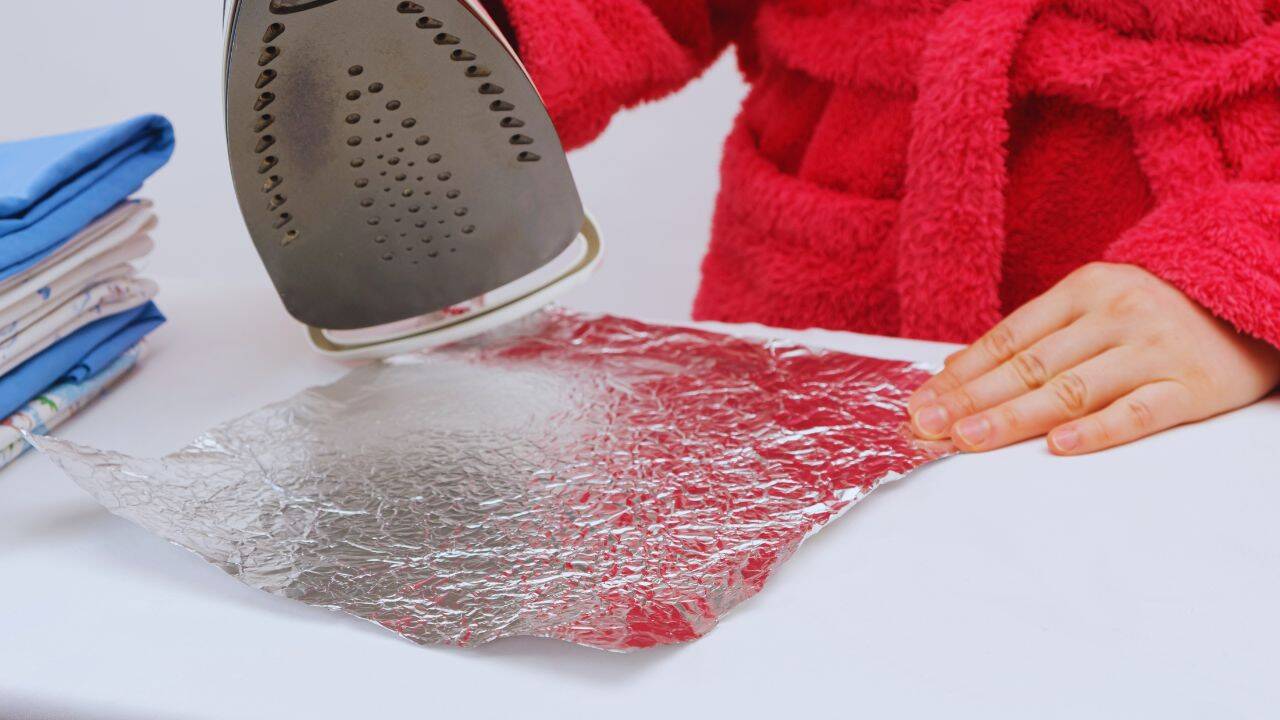
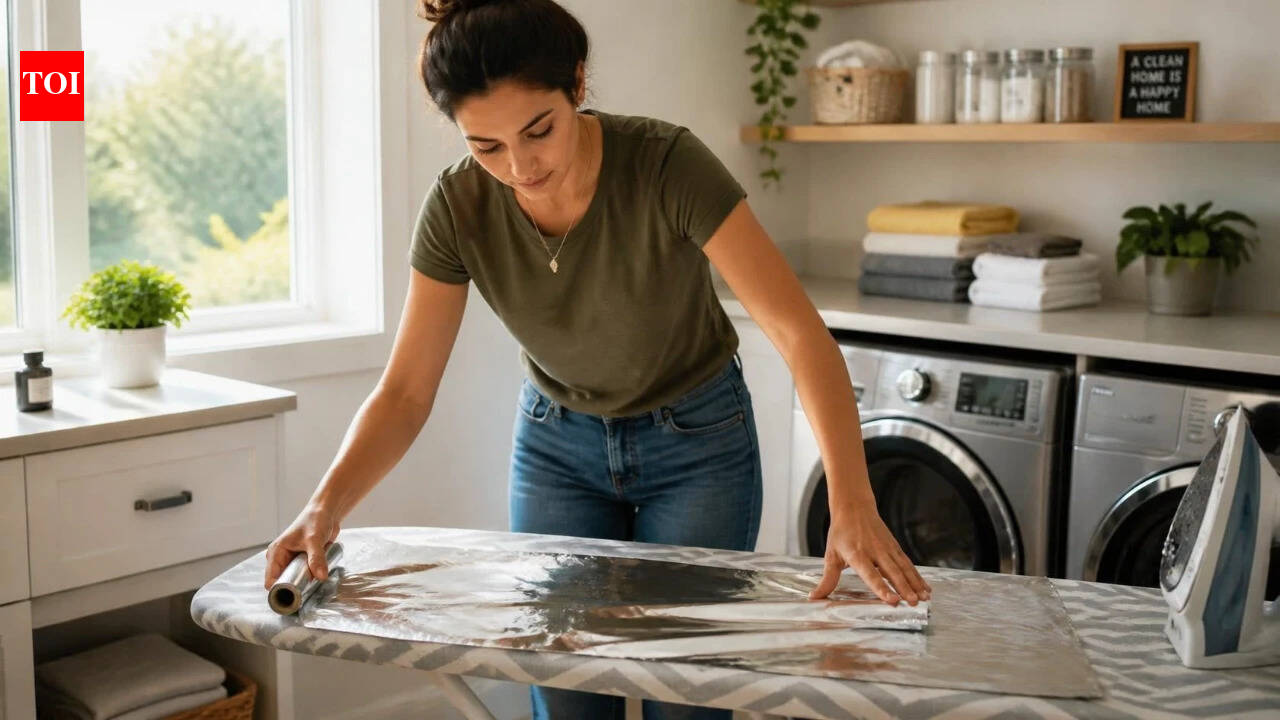
The foil trick helps spread heat evenly (Canva)
How to do it rightIf you want to give it a try, the process is quite simple. First take off the cover of the ironing-board. Place a sheet of aluminium foil across the board, shiny side up. Cover the ironing surface as much as possible without creating large folds or wrinkles. Then cover the foil again with the ironing-board cover. Leave the foil under the cover, not on top of the iron surface. Level everything so that the cover is flush. The ironing board should be stable and comfortable to use. When you have finished putting the cover back on, iron your clothes as you usually do. You don’t need to press harder to add foil. Choose the correct temperature and steam setting for the fabric.Why the shiny side is importantThere are differing recommendations as to which side of aluminium foil should be facing upwards. Standard household aluminium foil has a shiny side and a duller side because of the manufacturing process, but for this particular use the difference usually doesn’t matter. The important point is that the foil is underneath the ironing-board cover and is continuous metallic layer. Trying to iron directly on exposed foil, that’s another story. The foil can get very hot, can mark or damage delicate fabrics and can scratch the soleplate of the iron. That is why the foil should stay fast under the cover.The trick is because of heat transfer, not the foil being ‘hot’A common misconception is that the aluminium foil itself heats up. It does not. The heat is still coming from the iron. Aluminium just changes what some of that heat does. In general metals are good conductors of heat. Aluminium is especially useful for household applications due to its light weight, low cost and availability. The reflective surface can also bounce away some of the radiant heat from the area to be ironed. This combination makes foil useful in many situations where it is important to control the transfer of heat. The idea behind an ironing board is basically to stop some of the heat getting to the underside of the garment from being wasted into the board.What clothing would be most helpful?This method may be especially helpful for clothing made from fabrics that need heat and steam to remove wrinkles. Cotton and linen tend to get deep creases and usually need moisture, heat, and pressure. Bigger items like tablecloths, sheets and curtains can also take quite a while to iron because of the size of them. Delicate fabrics, however, need care. Excessive temperatures can damage silk, satin, synthetic materials and other heat-sensitive textiles. Always follow the garment’s care label instead of increasing the heat just because the ironing board has a foil layer. Set the iron to a low temperature if the fabric requires it.
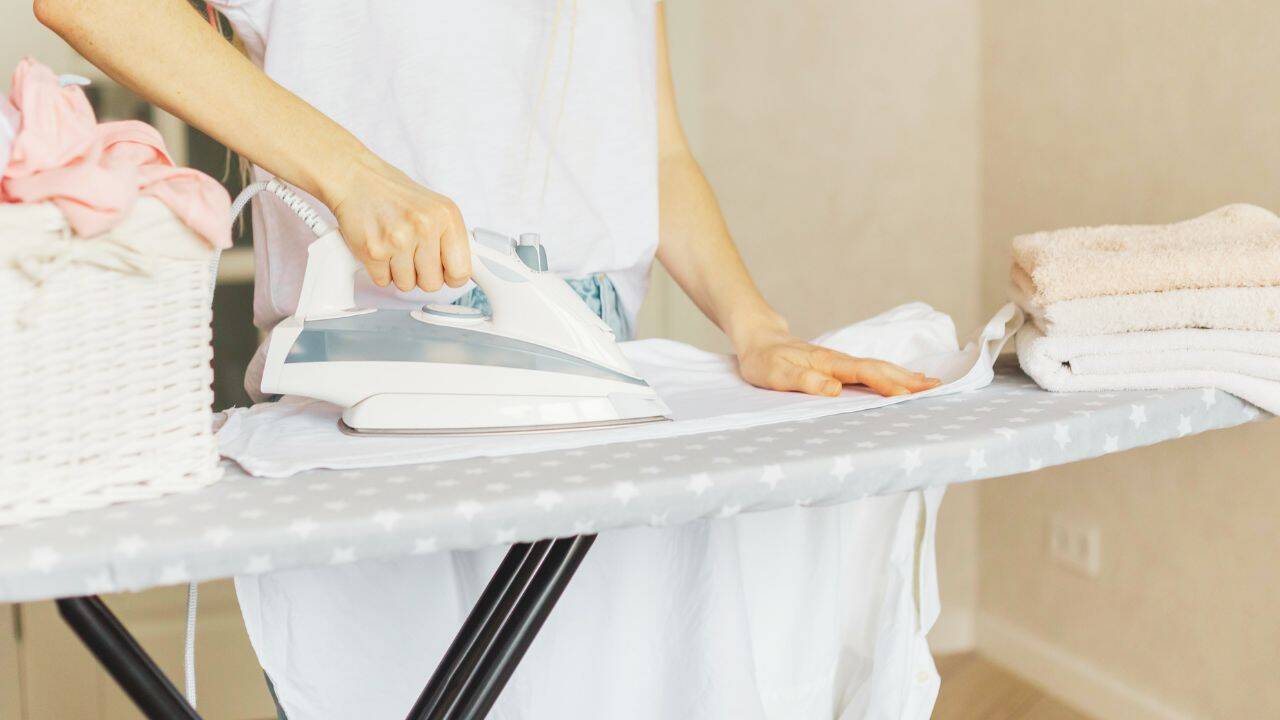
The foil should be put inside the board cover (Canva)
Other ways to make Ironing fasterThe foil trick is only one aspect of an effective ironing routine. For some fabrics, a little dampness in the clothes can make it easier to get rid of wrinkles. Steam irons can also make a big difference, as the moisture helps to relax the fibres. Temperature is also very important. Too little heat can leave creases behind, encouraging repeat passes. Excessive heat can scorch or damage fabric. You can also save time by ironing bulk clothes. Some people don’t iron a single shirt every couple of days. Instead, they wait until they have several pieces of clothing and then iron them all at once, which they think is a better use of their time.The order can also matter. Start with the things that require the lowest temperature, and work your way up to the fabrics that require higher settings. This avoids having to wait for the iron to cool down every time.PrecautionsThere are a few things you need to be aware of. The foil must lie flat under the ironing board cover. Crinkled foil may form an uneven surface and make ironing uncomfortable. The ironing board may also hold more heat than usual, so be careful when changing the cover or handling the board immediately after ironing. The most important thing is, the foil should not directly contact the iron or clothes. Keeping it under the board cover provides a barrier, and makes the technique much safer and more practical. And as ironing involves a very hot appliance the usual warnings still apply. Do not leave an iron on unattended. Keep away from children and flammable materials.A simple experiment to do at homeIf you’re wondering if the trick makes a noticeable difference, there’s an easy way to test it. Iron one section of a wrinkled cotton garment on your normal ironing board. Count the number of passes it takes to get the desired result. Then place a piece of aluminium foil under the cover of the ironing board and repeat the process on another similarly wrinkled area of the same garment using the same iron setting and amount of moisture.You may find the second section heats up quickly and requires fewer passes. It’s not going to be a dramatic difference, but it shows the basic principle of the experiment, which is reducing heat loss can help keep the temperature of the fabric.”The larger lesson behind the foil trickThe reason this household hack is so popular is pretty simple: sometimes making a chore go faster isn’t so much about working harder as it is about cutting down on wasted energy. An ironing board is designed to give a firm, heat resistant surface, but it does absorb some of the heat of the iron. That heat balance can be altered by a reflective metal layer beneath the cover. The foil does not remove wrinkles by itself, nor does it turn a slow ironing session into an instant job. But by reflecting some heat back to the garment, it can help create conditions in which wrinkles release more easily. For those who iron large amounts of clothes on a regular basis, a small improvement can add up.So next time a mountain of crumpled clothes needs dealing with, a roll of aluminium foil from the kitchen might provide a surprisingly simple experiment. It costs very little, takes only a few minutes to set up, and shows an everyday application of a basic physics principle: how efficiently heat moves can make a difference to how efficiently a task gets done.