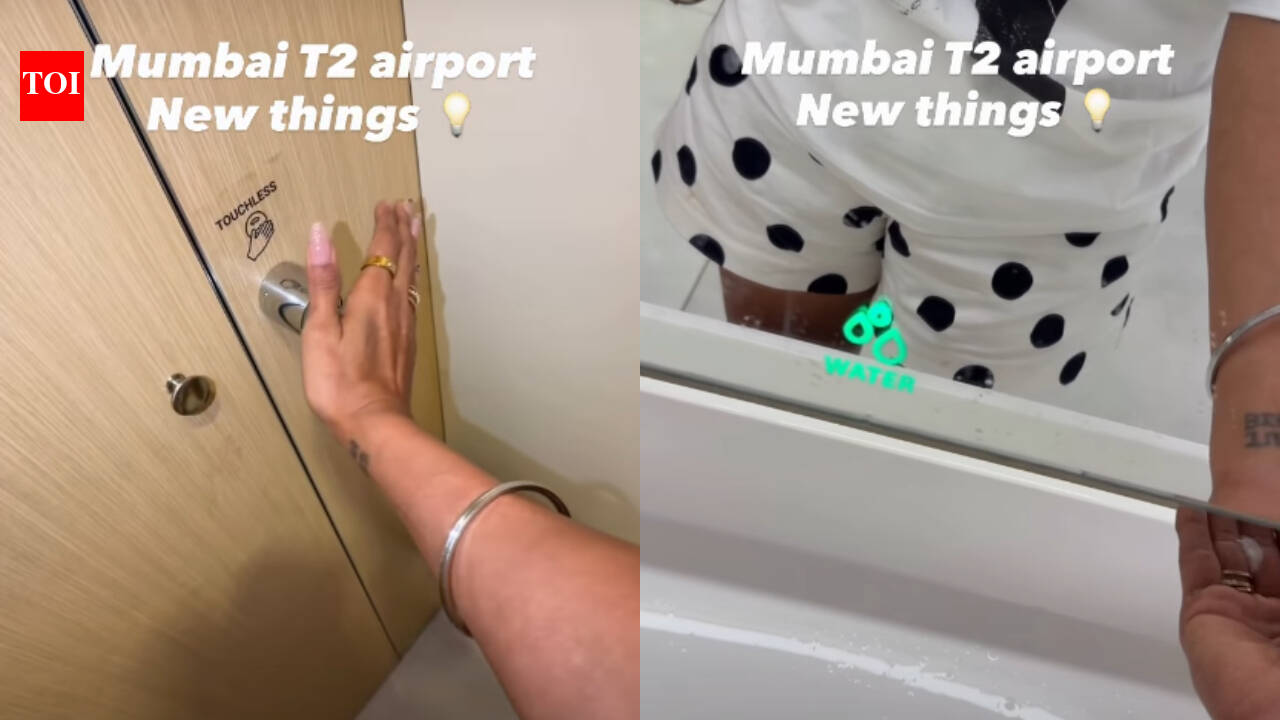
Mumbai News: You put your hands under a tap, and the water starts flowing. No knob to turn, no handle to touch. That’s the idea behind the touchless washroom features being introduced at Mumbai Airport’s Terminal 2.The facility is drawing attention for its sensor-operated taps and touch-free door systems. The idea is to reduce contact with surfaces that are used by hundreds of passengers every day. But the conversation hasn’t stopped at the technology. Some people are also asking whether these upgrades will make public washrooms cleaner, or if civic sense remains the bigger issue.Mumbai’s Chhatrapati Shivaji Maharaj International Airport (CSMIA) has proposed refurbishing 41 passenger washroom blocks at T2. The plan includes upgraded fittings and smart features aimed at improving the experience for travellers.
How do the touchless taps and doors work?
The concept is fairly simple. Instead of having to turn a tap or pull a door handle, passengers can use fittings that respond to sensors.Sensor-operated taps: Hold your hands under the spout and the water starts flowing. Move them away, and it stops. The sensor detects your hands, so there’s no need to touch a knob or handle. This can reduce contact with a shared fixture and prevent water from running longer than necessary.Touch-free doors: The way these work depends on the system installed. Some use motion sensors to open automatically, while others are designed to let people pass without having to grip a handle. Either way, the aim is to reduce contact with surfaces that people touch repeatedly throughout the day.For a busy airport, that can be useful. But touchless doesn’t mean that everything in the washroom is contact-free. Passengers may still need to touch other fixtures, and the sensors and doors need regular cleaning and maintenance to work properly.
Why is Mumbai Airport upgrading its washrooms?
The new features are part of a larger refurbishment plan.In April 2025, Mumbai International Airport Limited submitted a proposal to the Airports Economic Regulatory Authority of India (AERA) to renovate 41 passenger washroom blocks at Terminal 2. The proposal pointed to the wear and tear caused by heavy usage. Plumbing problems and concealed leakages had also made maintenance more difficult.The proposed work included new fittings and smart-washroom features such as touchless systems and smart mirrors.AERA’s assessment recommended carrying out the work in phases, starting with busy arrival areas. The airport operator later reported placing an order to refurbish 41 sets of passenger washrooms.With so many people using these facilities every day, fittings are bound to take a beating. The refurbishment aims to address that wear and tear while improving the experience for passengers. The technology is one part of the plan, not a substitute for regular upkeep.
Saving water is part of the plan, too
There’s another reason to look at these fittings: water consumption.CSMIA has reported using waterless urinals across its terminals, along with tap aerators in washbasins and flow reducers in jet sprays. Sensor-operated taps can also help cut down on wastage because water flows only when needed.The airport has also reported recycling treated wastewater for flushing, cooling and landscaping.These measures can help reduce the demand for fresh water. But they need to be maintained properly to deliver the intended benefits.Why are people talking about the touchless washrooms?The response online has been mixed. Some users welcome the idea of modern fittings in a busy public space. Others aren’t convinced that technology alone will make much difference to cleanliness.The concern is familiar to anyone who has used a crowded public washroom. Even when facilities are well designed, they can become unpleasant if people don’t use them responsibly.There’s also a practical question. What happens when someone has never used a sensor tap before? Without clear instructions, they may not know where to place their hands or how the fitting works. Simple signs could help avoid that confusion.So, while the upgrades may make certain tasks easier, the bigger question is whether the facilities will remain clean and well maintained once they are being used by large numbers of passengers.
Can smart taps and doors really keep washrooms clean?
They can help, but they can’t do the whole job.Fewer shared surfaces to touch may improve the experience, and sensor taps can help control water flow. But neither feature can replace regular cleaning, functioning plumbing or prompt repairs.The technology also needs attention. A sensor that stops working or a door that doesn’t open properly can quickly become a problem for passengers.And then there’s the human factor. Using bins, avoiding damage to fittings and leaving the washroom in a reasonable condition for the next person are small things, but they matter.Mumbai Airport T2’s touchless washrooms may make everyday tasks a little easier. Whether they also lead to a better experience for passengers will depend on how well the facilities are maintained and how people treat them.