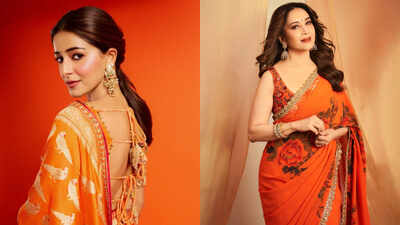
Navratri dressing begins with orange. If you’re planning what to wear on the first day, you don’t necessarily need to shop for a new outfit. That orange saree sitting in your cupboard, a kurta you haven’t worn in months or even a bright dupatta could work just as well.The first day of Navratri is dedicated to Goddess Shailputri, the first form of Goddess Durga. Orange is the traditional colour associated with Day 1 in the commonly followed Navratri colour sequence. And there are plenty of ways to wear it, whether you prefer a saree, a lehenga or a simple salwar suit.But before getting to the outfits, here’s what you should know about the goddess worshipped on the first day.
Navratri Day 1: Which goddess is worshipped?
Goddess Shailputri is worshipped on the first day of Navratri. Her name means ‘daughter of the mountain’, and she is believed to be the daughter of Himavan, the king of the Himalayas.
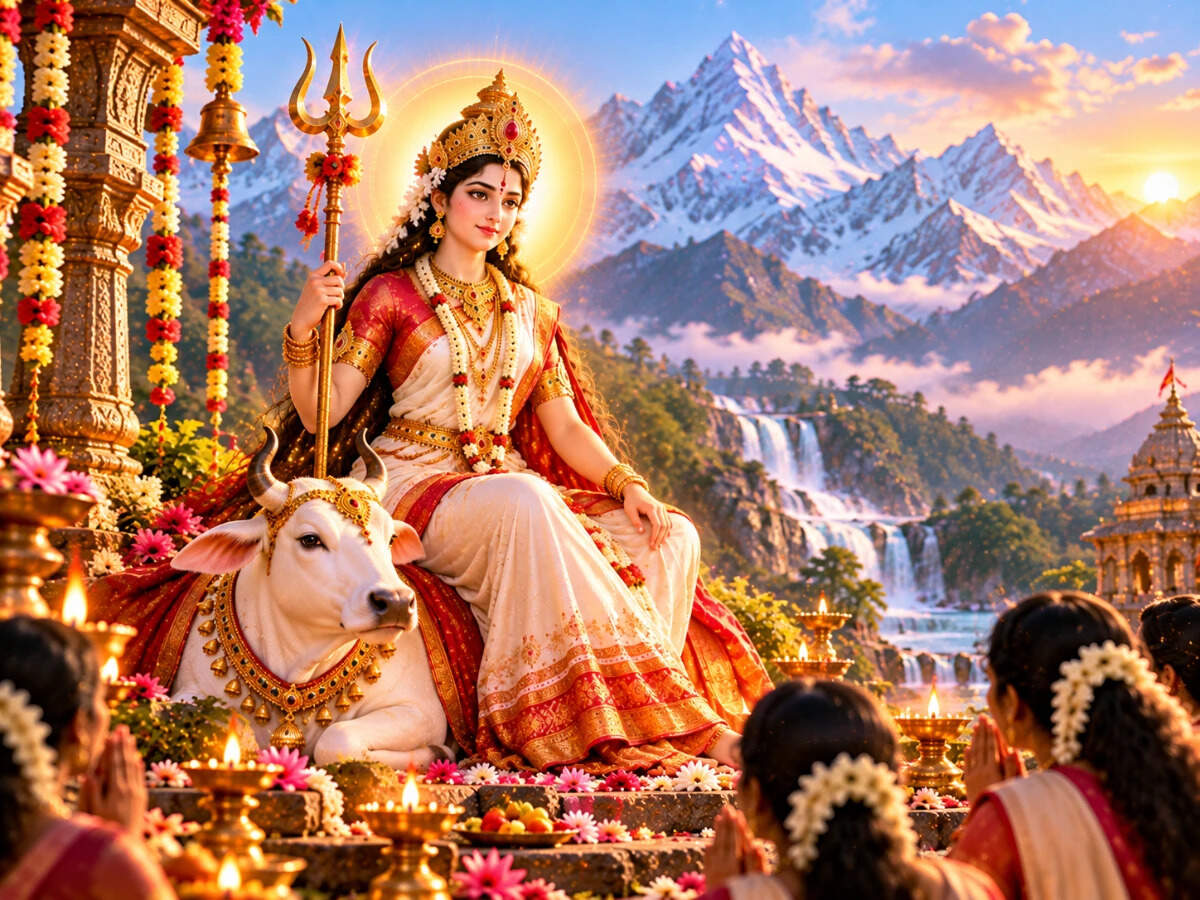
Maa Shailputri’s trident, lotus and bull are central features of her traditional iconography.
She is usually depicted riding a bull, with a trident in one hand and a lotus in the other. The goddess represents strength and devotion, and devotees offer prayers to her at the beginning of the nine-day festival.The first day also marks the start of several Navratri rituals, including Ghatasthapana, which is performed by devotees according to their family traditions and auspicious timings.
Why is orange the colour for Navratri Day 1?
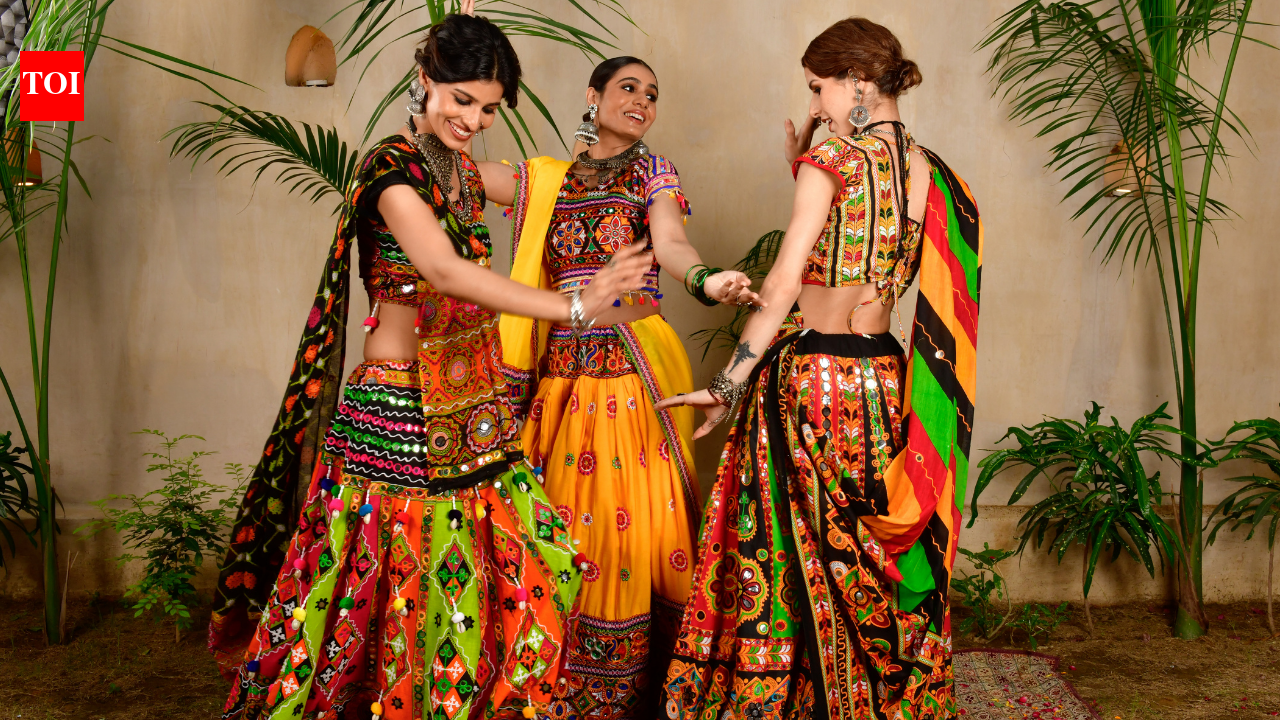
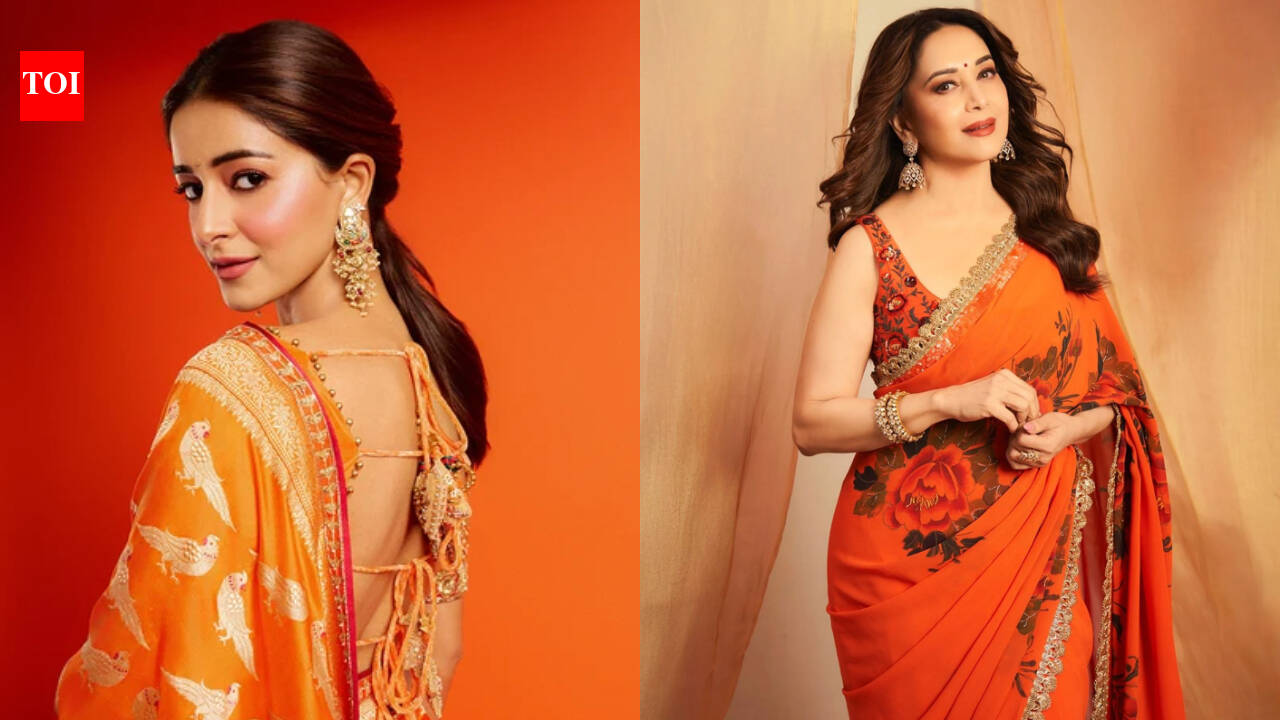
Orange is associated with energy, warmth and enthusiasm, making it a popular choice for the start of the festival. It’s also a colour that stands out without needing too much embellishment.And you don’t have to wear it from head to toe. Orange works beautifully with gold, ivory, cream and green. If a bright orange outfit feels like too much, try a softer shade or bring the colour in through your dupatta or blouse.Here are a few ways to style it for the first day of Navratri.1. An orange saree never goes out of styleIf you have an orange saree at home, Day 1 is a good time to bring it out. For morning puja or a family gathering, a cotton, Chanderi or lightweight silk saree is a comfortable choice. You can keep the look simple with a matching blouse, small gold earrings and a few bangles.For an evening celebration, a silk saree with a gold border or traditional embroidery can look dressier. A contrasting green or pink blouse will add colour, while a gold blouse keeps the outfit classic.There’s no need to pile on the jewellery. If your saree has a rich border or heavy work, let that be the focus. A pair of jhumkas and a bindi can be enough to pull the look together.2. An orange lehenga for garba and dandiyaPlanning to head out for garba or dandiya? An orange lehenga is a festive option that lets you have a little fun with your outfit.Look for mirror work, gota patti or embroidery if you want a traditional look. You could also pair a plain orange lehenga with a contrasting blouse in pink or green. The combination adds interest without making the outfit look too busy.Jewellery depends on the look you’re going for. Oxidised silver earrings work well with mirror work, while gold-toned jewellery gives the outfit a more traditional finish.And if you’re going to dance, think about comfort before anything else. Secure your dupatta properly and choose footwear that won’t leave your feet aching halfway through the evening.3. An orange salwar suit for an easy festive lookA saree or lehenga isn’t everyone’s first choice, especially if the day involves visiting a temple, meeting relatives and running around getting things done. An orange salwar suit is an easy alternative.A straight-cut kurta with matching trousers works well for a simple look. If you prefer something more traditional, try an Anarkali suit with a lightly embroidered dupatta. Small details such as a printed border, delicate thread work or gold accents can make the outfit feel festive.Pair it with juttis or comfortable sandals and earrings that suit the neckline. You can also add a cream or ivory dupatta if you want to break up the orange.4. Pair an orange kurta with white or ivoryYou don’t need a matching set to follow the Day 1 colour theme. An orange kurta with white trousers or ivory palazzos can look just as good, particularly if you prefer fuss-free dressing.For a daytime celebration, a cotton kurta with minimal prints is a practical choice. If you’re heading out in the evening, try one with embroidery or a more dressy finish.Keep the accessories simple. A pair of earrings, a small bag and comfortable footwear are all you need. This combination is also easy to put together with pieces you may already own.5. Not a fan of bright orange? Try it in small dosesIf a full orange outfit isn’t your thing, there’s no need to force it. A dupatta in the colour can brighten up a cream salwar suit, while an orange blouse can give a plain saree a festive feel.You could also try orange bangles, a potli bag or other small accessories. A softer, peachy orange is another option if you prefer muted colours over a bright, saturated shade.The idea is to work with your wardrobe, not buy an entirely new one for a single day.
What jewellery should you wear with orange?
Gold jewellery is an easy match, especially with silk sarees, embroidered suits and traditional lehengas. Jhumkas and bangles are classic choices, while a necklace can work if your outfit has a simple neckline.Oxidised silver looks good with mirror work, printed fabrics and cotton outfits. Pearls and ivory accessories are worth considering if you prefer a quieter look.One simple rule works for most outfits: if the clothes already have heavy embroidery, keep the jewellery light. With a plain kurta or saree, you can afford to make the accessories stand out.
Navratri Day 1: What should you wear?
It really depends on how you plan to celebrate. A saree works for a traditional puja, a lehenga is a good pick for garba, and a salwar suit is an easy option if you have a busy day ahead.And if you already own something orange, wear that. A well-styled outfit you feel comfortable in will always work better than something new that doesn’t feel like you.Navratri is about prayer and celebration, so there’s no need to overthink the wardrobe. Pick your shade of orange, add a few festive touches and wear it your way.