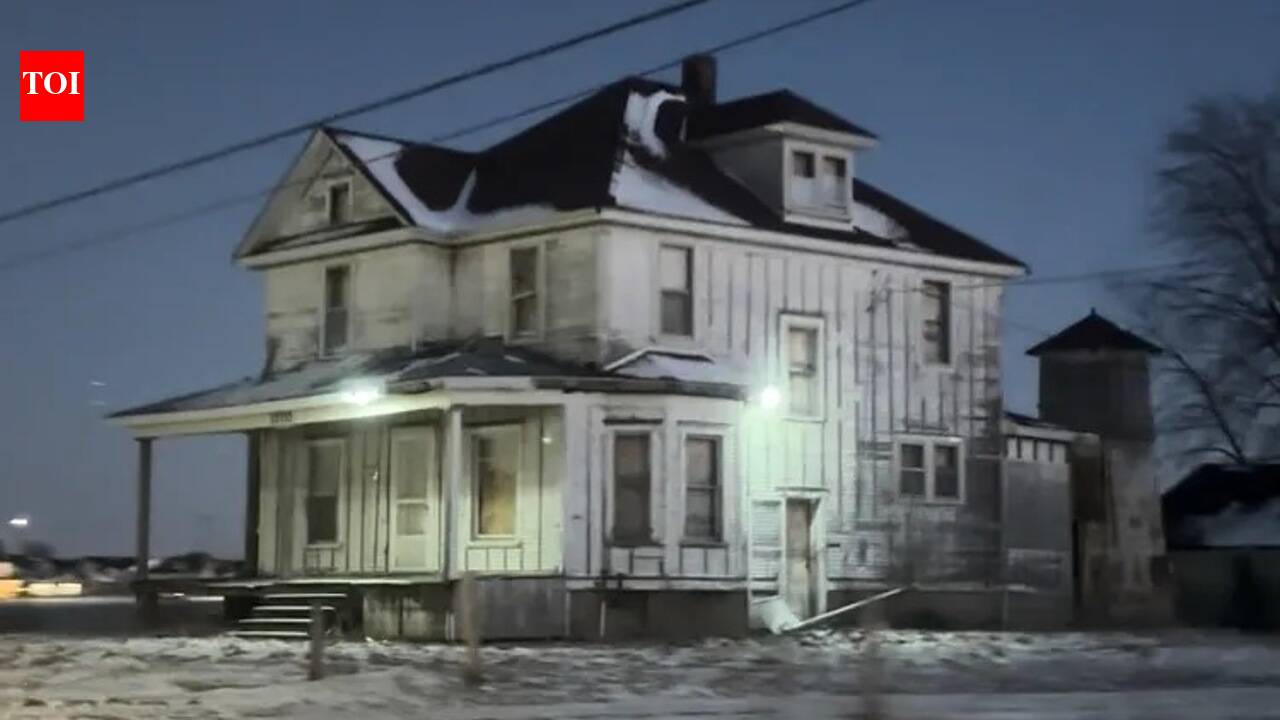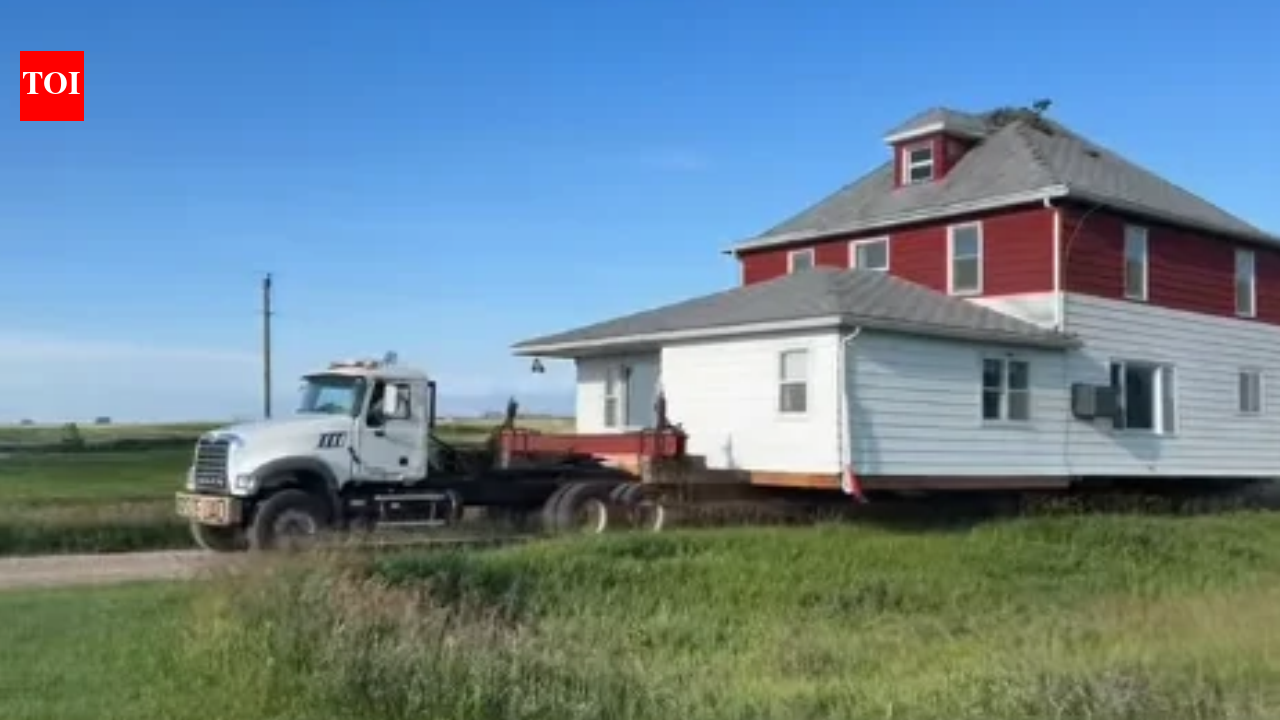
Imagine seeing a two-storey house lifted off its foundation and carried down a road, with its walls, windows and roof still intact. Now imagine that the building is 112 years old, belongs to your family’s history and is being moved not a few metres, but nearly 9 km to a new home.For JaSondra Schmidt, this was not just an unusual construction project. It was a chance to save a house connected to her great-great-grandfather rather than let it slip away from the family. Schmidt and her husband, Jason, took on the costly task of relocating the 1914 home in North Dakota, US, to farmland where they planned to restore it and live in it.The expected cost of the wider project was as much as $380,000. Why spend that much on a century-old house when building a new one might seem easier? The answer lies in a family connection that could not simply be recreated with fresh timber, new bricks or a modern floor plan.
Why move a house instead of building a new one?
For many people, an old house is valuable because of its location, design or potential resale price. For Schmidt, the value was also personal.The couple also had a meaningful destination in mind. Jason’s grandparents had purchased the farmland in the early 1940s. Moving Schmidt’s ancestral house there would bring together two sides of the family’s history: her great-great-grandfather’s home and land associated with Jason’s grandparents.That combination made the move about more than saving an ageing structure. It was an attempt to preserve a family legacy while creating a place where the next generation could build its own memories.
How engineers moved a 112-year-old house without dismantling it
Moving a century-old house intact is a specialised engineering operation. The building must be supported, lifted and transported in a way that minimises stress on its structure.The North Dakota home measured approximately 30 feet wide and 60 feet long. Rather than demolish it and transport the materials separately, specialist house movers prepared the structure for relocation as a single unit.The process involved several stages.
1. Separating the house from its foundation
The first step was to detach the house from its original foundation. Workers prepared the structure so that it could be raised without dismantling its walls and roof.
2. Lifting the building onto steel supports
Heavy steel beams were positioned beneath the house, allowing lifting equipment to raise the structure. These supports helped distribute the building’s weight and provided a base for moving it.
3. Transporting the house along a planned route
Moving a building of this size requires more than a suitable vehicle. The route must accommodate its width, height and weight, while obstacles such as overhead power lines must be addressed.According to media reports, two power companies coordinated the handling of electrical lines to allow the house to pass safely.
4. Preparing a new foundation
Once the house reached its destination, it needed a new basement and foundation. The building remained elevated on the moving equipment for nearly two months while the basement work was completed.The project was not without anxiety. Winter weather and snowstorms made the waiting period particularly difficult for Schmidt, who worried about whether the old house would withstand the conditions.The relocation itself reportedly cost around $40,000. Concrete work for the basement and foundation exceeded $110,000, while the expected cost of the overall project, including restoration and construction work, reached as much as $380,000.These figures show why moving a house is not necessarily a cheaper alternative to building one. The decision was driven by what the couple wanted to preserve, not simply by the economics of construction.
A 1914 house gets a new address and another chance
The 112-year-old house will no longer stand on the land where it was originally built. Yet the relocation gives it an opportunity to remain part of a living family story instead of surviving only in photographs and recollections.The anticipated $380,000 expenditure is substantial, and restoring an old house for modern living comes with practical challenges. But the couple’s goal was not simply to own a historic property. They wanted to preserve a physical connection to their ancestors and pass it on to their daughters.A newly built house could offer a fresh start. This one offers something different: a past that can still be lived in.