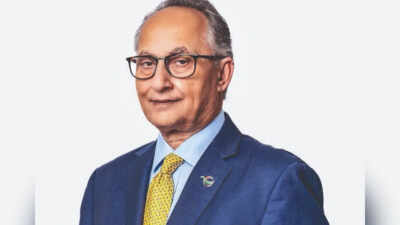
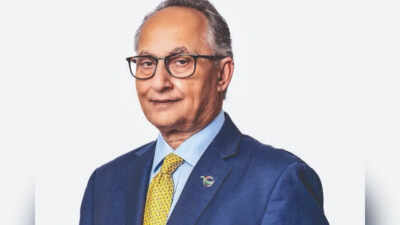
Amid global trade disruption, DP World CEO Yuvraj Narayan spoke to TOI about his company’s plans to ensure smooth cargo movement as well as plans for India, where it is looking to invest $3-5 billion. Excerpts:How is it going because of what’s happening in West Asia, what is the impact on Jebel Ali and on your revenue?With the Strait of Hormuz being virtually shut in terms of commercial traffic, there are few vessels coming into Jebel Ali. So, 10% of the container that we used to handle daily is what is being handled today and that too is through Khorfakkan and Fujairah. But because we are diversified, we have enough beforeJebel Ali and enough after Jebel Ali. If the Strait of Hormuz opens tomorrow, within 60 days, everybody will be back. Globally, our business is doing very well. We are not waiting but creating alternatives. We are building a new port in Fujairah, creating capacity outside the Strait of Hormuz. While there will be solutions, costs will definitely change for the worse. Today, you need roughly at least 30% more capacity on the water to handle the same cargo, globally. On top of that, the world just exited a zero-interest rate phase. As far as operating cost is concerned, double that from oil and energy consumption standpoint.Plus, insurance…If available. Before and after insurance, you need crew. You cannot put people’s lives at risk. Everybody is going to create different levels of resilience in their supply chain. It’s going to come at a significant cost and that cost is going to be ultimately paid by consumers.How many trucks are you deploying to move cargo from Fujairah and other ports to Jebel Ali, 700-800? Where have you got them from?It will double over time. We got the trucks reasonably easily, some from Europe, some available within West Asia.What else did you change?We moved a lot of equipment and people from Jebel Ali to Khorfakkan. These are entry ports, we’re going to build more. Then, we opened the land bridge from Saudi, which meant we needed to get the customs authorities to work together. One of our national interests is to keep these corridors open. So, we are trying to create new links to Oman.Is there a Plan C too given the attacks from the Houthis and the threat of fresh disruptions?So, you know, Europe, we are expanding capacity in Egypt, both on the port side and on the free zone side. We have a large capacity in Jeddah. We are going to open (a container terminal in) Tuna Tekra in India, which will be available by mid-next year. We are hoping Vadhvan (port) finally happens. If we were ready with Vadhvan, today it would have been used. It will enable India to provide resilient supply chains and will be essential if India has to succeed in manufacturing for the world.What does this mean for Indian cargo, you account for a large chunk of it?There’s enough capacity for the level of trade happening in India today. The success of Make in India will depend on the availability of much higher levels of capacity across the supply chain: coastal shipping, ports, roadways, rail. You need other infrastructure too. While we have seen some success, it is not happening at a scary pace, the demand is much more because people are trying to diversify away from China. India is there in everybody’s plans, but the pace has to increase.There’s a change in the nature of goods being traded and electronics exports from India have grown. What is the scale of express cargo?Apple has moved into India and we are pushing almost 500 tonnes of cargo a week; it can increase by 30-40%. We are bringing a lot of our global customers into India and that’s why you’ve seen our interest in FTZs, where we are doubling our capacity. We are looking to increase capacity with our inland container depot, Tuna Tekra is a big investment. We recently won a new container depot for Dadri which should be a close to Rs 2,000 crore investment. We have bid for some parts of Vadhavan. So, wherever possible, we are ready.What is the future of IMEC? Is some preparatory work going on?In today’s environment, there is not much capacity, it is all lying in Jebel Ali. So, you use Fujairah and Khorfakkan, then, you use intermodal, use rail, which requires more investment. Or, once it comes to Jebel Ali, you use the Ro-Ro mechanism out ofIraq and from there to Europe by road. In fact, a vessel from India is going to do that in a week or 10 days from now.Is there a lot of congestion at ports, are containers available?All ports are full, all the empties (containers) are stuck somewhere. A large number is stuck in the region. Global trade is very imbalanced right now. East to west is full, while half from west to east is empty (containers). Unless we get all the empties, they don’t get full. So just positioning empty containers has a huge cost.