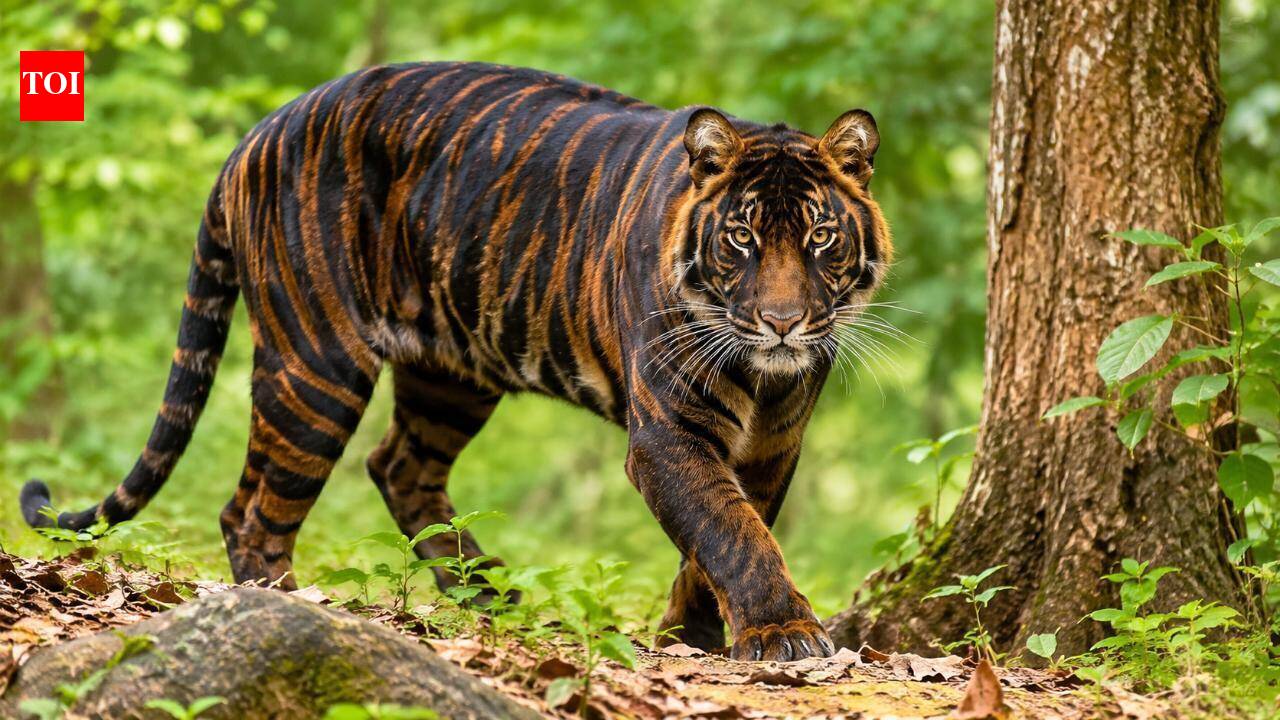
Imagine walking inside the forests of Odisha and witnessing a wildlife spectacle that few places in the world can offer which is seeing a tiger emerging from the shadows. But it’s not your usual orange coated but hidden beneath unimaginable thick black stripes. Now these Bengal tigers are almost entirely dark and rare. So rare that there are only 19 of them in the whole wide world and guess what, all these roam in India.For those who don’t know, this is no optical illusion or a different species of big cat but a rare genetic variation that has made Similipal Tiger Reserve in Odisha the only known wild habitat in the world for pseudo-melanistic tigers. Located in the Mayurbhanj district, Similipal is among India’s most extraordinary wildlife destinations. While the reserve is home to elephants, leopards, gaurs, deer and hundreds of bird species, its black tigers have given it a distinctive place on the global wildlife map.For travellers interested in forests, wildlife photography and experiences beyond conventional tourist circuits, this place is where you need to be.Black tigers in SimilipalBlack tigers are not a separate species or a completely black-coloured version of the Bengal tiger. Their unusual appearance is caused by a genetic condition known as pseudo-melanism.The phenomenon is associated with a recessive genetic variant affecting the Taqpep gene, which influences the formation of coat patterns. In ordinary Bengal tigers, the dark stripes are separated by larger areas of orange fur. In pseudo-melanistic individuals, the stripes expand and merge, producing a predominantly dark appearance.Research published in 2021 in the journal Proceedings of the National Academy of Sciences examined the genetic basis of pseudo-melanism in Similipal’s tigers and its relationship with the reserve’s relatively isolated tiger population.The unusual tigers were scientifically documented in the 1990s, and subsequent camera-trap studies helped establish their presence in the reserve. Their rarity makes Similipal particularly important not only for wildlife enthusiasts but also for conservation researchers.Similipal’s growing black tiger population

Black tiger
According to the Odisha government’s All Odisha Tiger Estimation 2023–24, Similipal had 27 adult tigers, of which 13 were pseudo-melanistic. The survey also recorded eight cubs.The numbers have since increased. A camera-trap exercise conducted by the Odisha Forest Department in 2026 identified 35 adult tigers, including 19 pseudo-melanistic individuals. The survey also recorded 16 cubs. The findings were communicated to the Wildlife Institute of India for verification, according to a July 2026 report by The New Indian Express.This means that more than half of the adult tigers identified in the latest exercise displayed the unusual coat pattern.A 2021 study published in PNAS found that the mutation responsible for pseudo-melanism was present in the Similipal population but absent from the 395 other wild tigers examined in the study.Similipal beyond black tigersSpread across approximately 2,750 sq km, Similipal is much more than a destination for tiger enthusiasts. It is a vast landscape of dense sal forests, grasslands, rolling hills, rivers and waterfalls in northern Odisha.The reserve is also part of the UNESCO-listed Similipal Biosphere Reserve. Its biodiversity includes elephants, leopards, gaurs, deer and an impressive variety of birds and orchids. For nature lovers, the experience is as much about exploring the forest ecosystem as it is about spotting its most famous inhabitants.One of the major attractions is Barehipani Falls, a spectacular waterfall cascading from a height of approximately 399 metres.Another notable stop is Joranda Falls, which offers a different perspective of the reserve’s dramatic landscape.Travellers can also explore Chahala, a meadow and wildlife-watching area with a watchtower, while Ramatirtha is known for its crocodile conservation centre.How to explore Similipal: Safaris and nature camps
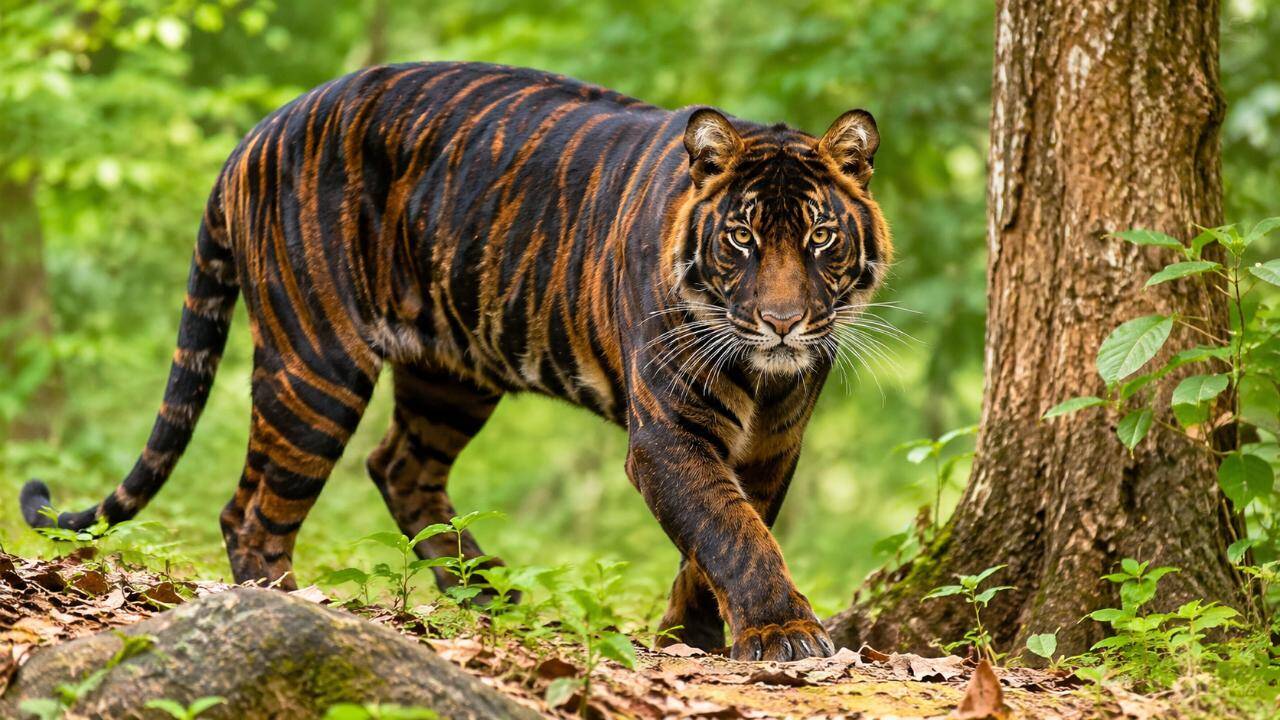
Black-Striped Tiger in the Forest
For visitors, a guided safari is one of the best ways to experience the reserve. The forest department operates tourism access through designated entry gates, including Pithabata on the Baripada side and Kalikaprasad on the Jashipur side. Open-jeep safaris operate through designated zones, subject to availability and forest conditions.The 2026–27 visitor season opened on November 1, 2026. The reserve generally follows a seasonal tourism calendar, with monsoon restrictions affecting day visits and safari routes. Visitors should check the latest forest department advisories before planning their journey.For a more immersive experience, travellers can book accommodation at one of Similipal’s five nature camps:
- Jamuani
- Talabandha
- Gurguria
- Kumari
- Barehipani
Staying overnight allows visitors to experience the forest at different times of the day, particularly during early mornings when bird activity and the sounds of the wilderness make the surroundings especially atmospheric.Best time to visitNovember to June is generally the preferred period for visiting Similipal, with the cooler months offering pleasant conditions for exploring the forest. Waterfalls are particularly impressive after the monsoon, although access depends on weather and forest department permissions.Visitors should also follow forest regulations, avoid littering, refrain from disturbing animals and respect restrictions on photography and other activities.