Some proverbs sound harsh the first time people hear them. Others sound wise immediately. This Chinese proverb sits somewhere in between because its message feels uncomfortable at first, especially in a world where people are constantly told that truly good individuals should sacrifice endlessly for others.“A gentleman would rescue a man trapped in a well, but he would not jump in himself. He is not perfect, but he is not stupid, either.”The wording feels calm and practical. Almost cold, depending on how somebody reads it. Yet underneath the proverb sits a surprisingly realistic observation about kindness, boundaries and human behaviour. The saying does not reject helping people. In fact, it openly encourages helping somebody in danger. The important difference is that the gentleman helps intelligently rather than emotionally throwing himself into disaster too.That distinction matters far more than it first appears.Many people grow up believing kindness always requires self-sacrifice. Films, stories and even social expectations often glorify people who destroy themselves while trying to save everybody else. The proverb quietly challenges that idea. It suggests that wisdom matters alongside compassion. A person who helps recklessly may create two victims instead of solving one problem.That sounds blunt.Still, it feels painfully true in many real-life situations.
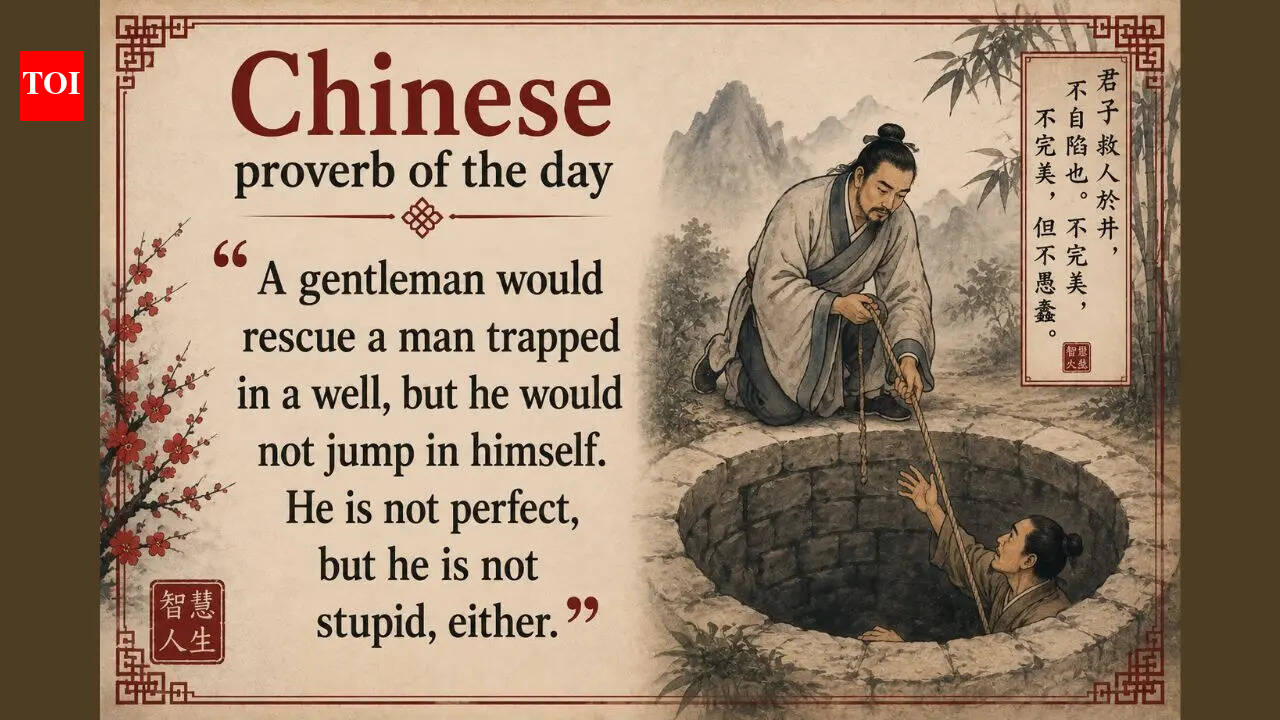
Chinese proverb of the day
“A gentleman would rescue a man trapped in a well, but he would not jump in himself. He is not perfect, but he is not stupid, either.”
What is the meaning behind this Chinese proverb
At its core, the proverb appears to argue that good intentions alone are not enough. Compassion without judgment can become dangerous because emotions sometimes push people toward impulsive decisions that worsen situations rather than improving them.The image inside the proverb is simple but powerful. A man falls into a well. A decent person naturally wants to help. The gentleman does help, though he avoids jumping into the well himself because that would trap both people instead of solving the problem. Instead, he likely finds a rope, calls for assistance or creates another safer solution.The proverb seems to admire this kind of practical wisdom.It suggests that intelligence and kindness should work together rather than against each other. Helping others does not require abandoning common sense completely. In fact, the saying almost argues the opposite. Truly effective help usually requires calm thinking rather than emotional panic.That idea applies far beyond literal emergencies.People often emotionally “jump into wells” for others in everyday life without realising it.
Many people confuse kindness with self-destruction
One reason this proverb still feels relevant today is that modern culture sometimes romanticises unhealthy sacrifice. People are often praised for giving endlessly, tolerating toxic behaviour endlessly or carrying everybody else’s emotional burdens while ignoring their own well-being completely.That pattern appears everywhere.Inside relationships, families, friendships, and workplaces, too.Someone may constantly rescue irresponsible friends while quietly exhausting themselves emotionally. Another person may remain trapped in unhealthy relationships because they believe leaving would make them selfish. Some individuals spend years solving everybody else’s crises while their own mental health slowly collapses in the background.The proverb seems deeply suspicious of this kind of behaviour.Not because helping others is wrong.Because destroying yourself while helping usually creates more suffering eventually.The saying feels surprisingly modern in that sense. It recognises something many adults learn painfully later in life: boundaries are not cruelty. Sometimes they are necessary for survival.
Wisdom and compassion are not opposites
Another interesting thing about the proverb is that it refuses the idea that intelligence makes somebody cold or uncaring. Many people imagine wise individuals as emotionally distant. This saying presents wisdom differently.The gentleman does help.He simply refuses to help foolishly.That balance matters enormously. Human beings often make terrible decisions when emotions completely overpower judgment. Panic, guilt or sympathy can push people into situations they are not equipped to handle safely.The proverb quietly argues that wisdom means remaining compassionate without becoming reckless.That can be difficult.Especially because society sometimes labels practical people as selfish when they refuse to sacrifice themselves endlessly for others. The gentleman in the proverb probably understands that saving someone effectively matters more than appearing heroic publicly.Real wisdom often looks less dramatic than movies suggest.
The proverb also says something important about human limits
There is another layer hidden inside this saying that makes it emotionally interesting. The proverb accepts that human beings are imperfect. The gentleman is described as neither perfect nor stupid. That wording feels important because it removes unrealistic expectations completely.Nobody can save everybody. Nobody can solve every crisis personally. Nobody can carry unlimited emotional weight forever.Many people struggle to accept those limits. Some continue trying to rescue everybody around them until exhaustion, resentment, or burnout eventually appear. Others feel guilty whenever they prioritise their own safety or peace.The proverb appears to reject that guilt directly.It suggests that recognising personal limits is not a weakness. It is maturity.That idea feels especially relevant now because modern life already leaves many individuals emotionally overwhelmed. Constant connectivity means people absorb endless problems through news, social media and personal relationships every single day.Without boundaries, emotional exhaustion becomes almost inevitable.
Why old Chinese proverbs still resonate now
Ancient Chinese proverbs often survive because they combine simplicity with psychological realism. They rarely sound overly sentimental. Instead, many focus on practical observations about human behaviour, relationships and decision-making.This proverb follows that tradition perfectly.It understands that kindness alone is not always enough to navigate complicated situations wisely. People also need judgment, patience and emotional discipline. Otherwise, compassion can quickly turn into self-destruction.Modern audiences probably connect with the saying because many individuals eventually experience situations where helping somebody too much causes harm instead of improvement. Parents experience it. Friends experience it. Partners experience it too.Sometimes people only learn the importance of boundaries after crossing them repeatedly.The proverb seems to offer that lesson early.
Life lessons hidden inside the proverb
The proverb quietly teaches that compassion works best when balanced with wisdom. Good intentions matter, though practical thinking matters equally because emotional reactions alone can worsen situations unexpectedly. Another important lesson involves boundaries. Helping others should not require destroying personal stability, safety or mental health completely.The saying also highlights emotional discipline. Calm decisions usually create better outcomes than impulsive reactions driven entirely by guilt, panic or pressure. People often believe self-sacrifice automatically makes them morally superior, though the proverb appears far more interested in effective help than dramatic gestures.Perhaps the biggest lesson hidden inside the saying is that wisdom sometimes means recognising limits honestly instead of pretending limitless sacrifice is sustainable forever.
What this proverb reveals about kindness, boundaries, wisdom, and self-preservation
This proverb may initially sound emotionally distant, though its deeper message feels surprisingly compassionate. The gentleman helps the man trapped in the well. He simply refuses to turn one disaster into two through impulsive action.That distinction changes everything.The saying recognises something many people eventually learn through painful experience: kindness without boundaries can become dangerous not only for the helper, but sometimes for everybody involved.Perhaps that is why the proverb still resonates now. Modern life constantly pressures people to prove goodness through endless sacrifice. This old Chinese saying quietly pushes back against that idea.Helping others matters deeply.Keeping yourself from falling into the well matters too.