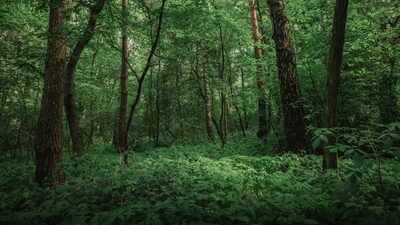
For most people, the difference seems obvious until someone actually asks the question: Is that a forest or a jungle?The two words are often used for the same kind of place, especially when talking about a landscape filled with trees and wild vegetation. But they do not have exactly the same meaning.“Forest” is a defined term used in ecology and land classification. “Jungle” is a more informal word generally used for areas where vegetation is thick, tangled, and difficult to move through.
What makes a forest a forest?
A forest is not simply a place with a lot of trees.The Food and Agriculture Organization (FAO), for instance, defines forest using measurements including the size of the area, tree height, and canopy cover. Under its definition, forest land spans more than 0.5 hectares, has trees higher than 5 meters, and has more than 10% canopy cover, or contains trees capable of reaching those levels. Land mainly used for agriculture or urban purposes is excluded.That definition also shows why a forest does not necessarily have to look like the dense green landscape often seen in films.
Not every forest is difficult to walk through
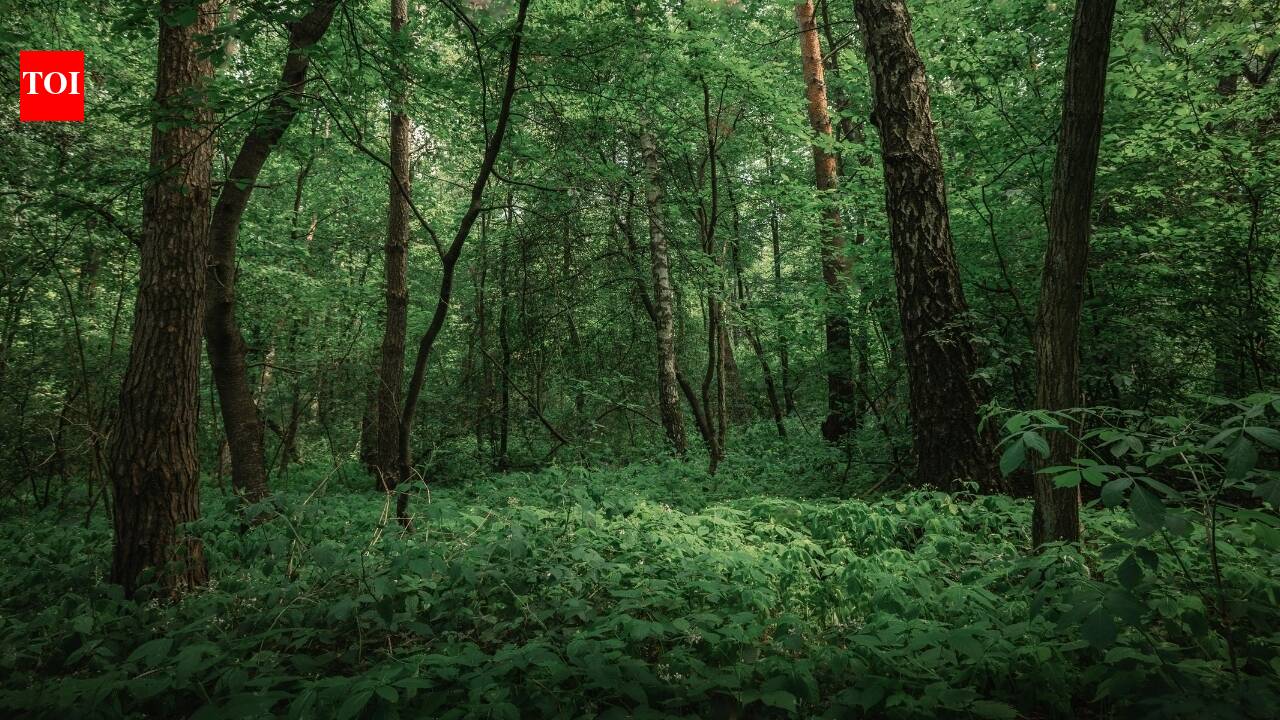
Some forests have a relatively open appearance.The trees may be spread out, allowing sunlight to reach the ground and vegetation to grow between them. Other forests can have several layers of vegetation, with a dense canopy above and substantial growth underneath.FAO’s forest classifications recognize both closed and open forest formations.So, “forest” tells us something about the land and its tree cover. It does not automatically tell us how crowded the vegetation will feel at ground level.
Where does the word “jungle” fit in?
This is where things get less precise.“Jungle” does not have one standard scientific definition comparable to the technical definitions used for forest. In everyday use, it generally refers to vegetation that is especially dense and tangled.That can mean thick shrubs, vines, climbers, young trees, and other plants growing close together.The word is particularly associated with tropical landscapes, but it should not be treated as the scientific name for a particular type of forest.
A rainforest is not simply another word for jungle
Another common mix-up is between rainforest and jungle.A rainforest is a type of forest associated with very high rainfall. “Jungle” describes dense vegetation rather than a specific forest category.That means the words are describing different things. A rainforest can have areas of extremely thick vegetation that people might call a jungle, but the two terms are not interchangeable.
Why can some forests become so dense?
The vegetation below the tallest trees can change depending on how much light reaches the ground.When a gap opens in the canopy, for example, more sunlight can reach plants growing below. New vegetation can then develop in that space.In forests where conditions support vigorous plant growth, this can produce dense undergrowth, making some areas look almost impossible to pass through.
So, what is the actual difference?
The simplest way to put it is that “forest” is the more precise ecological and land-use term, while “jungle” is a descriptive everyday term for particularly dense vegetation.A forest may be open or densely covered with plants underneath. Calling something a jungle, meanwhile, focuses more on how thick and tangled the vegetation appears.So the next time the words “forest” and “jungle” come up, they do not necessarily refer to two completely different places. The distinction is mainly about what the term is describing and how precisely it is being used.Thumb image: Canva (for representative purposes only)