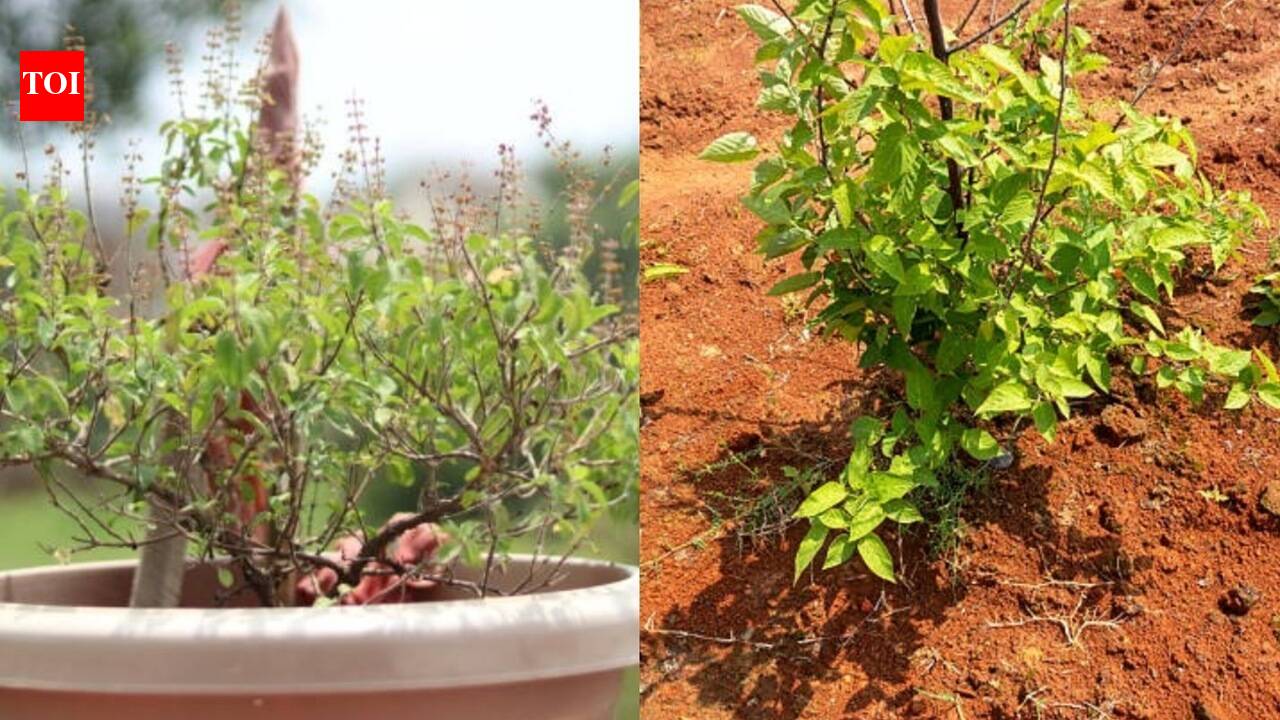
Walk through almost any Indian neighborhood, and you’ll spot at least one Tulsi Vrindavan, the small raised pedestal or pot where households traditionally grow their holy basil, often right at the entrance or in a courtyard. That centuries-old preference for pot cultivation raises a genuinely practical question for anyone growing tulsi today, whether for daily puja, its use in kadha and tea, or simply as a fragrant addition to a balcony: does it actually grow better in a pot, or would it thrive more if planted straight into the ground? The honest answer depends less on tradition and more on one specific factor that trips up more people than anything else. Here’s how the two compare.
What tulsi actually needs, regardless of where it’s planted
Before comparing pot and ground growing, it’s worth understanding what tulsi is fussy about in the first place. It prefers loamy, fertile soil with a slightly acidic to neutral pH, somewhere between 6 and 7.5, and needs at least four to six hours of sunlight daily, with full sun bringing out its most potent flavour and aroma. The one non-negotiable requirement, though, is drainage. Tulsi is unusually sensitive to both ends of the water spectrum, wilting just as readily from drought as it does from soil that stays soggy for too long, which makes drainage the single biggest factor in whether either growing method actually succeeds.
The case for growing tulsi in a pot
A pot gives you something ground planting simply can’t: complete control over that all-important drainage. Using a container with proper drainage holes and a well-draining potting mix all but eliminates the waterlogging risk that kills more tulsi plants than almost anything else, particularly during India’s monsoon months when ground soil can stay saturated for days at a stretch. Pots also let you move the plant to chase the best sunlight through the day, shift it under cover during unusually heavy rain, or bring it indoors during an unexpected cold snap, a genuine advantage for anyone in a region with real winter temperature drops. For balcony and apartment gardeners without access to open land, it’s often the only realistic option in the first place.
The case for growing tulsi in the ground
Where ground planting pulls ahead is sheer growth potential. Given good soil and conditions, tulsi can grow into a proper, bushy shrub reaching four to five feet, a size a pot can rarely support no matter how large the container gets. The larger volume of surrounding earth also buffers the roots against sudden temperature and moisture swings far better than a pot can, which usually means less frequent watering once the plant is established, and there’s no need to ever repot a plant that’s already in the ground. For anyone with genuinely well-draining garden soil, ground planting can produce a larger, longer-lived plant with noticeably less ongoing maintenance.
Where each option can go wrong
Both methods have a specific failure point worth knowing in advance. In a pot, the most common mistake is choosing a container that’s too small, an undersized pot causes roots to fill it within weeks, leading to constant drying out and the plant bolting to seed prematurely instead of producing lush, harvestable leaves. In the ground, the risk runs the opposite direction: without genuinely good natural drainage, especially in heavier clay soils common in many parts of India, the plant’s roots can sit in waterlogged soil through the monsoon, leading to root rot that’s much harder to catch and correct than in a pot, since you can’t simply lift the plant out to check.
So which actually grows better?
There isn’t a single universal winner here, but there is a genuinely useful way to decide. If your garden soil drains well and doesn’t turn soggy after heavy rain, ground planting will likely produce a bigger, more robust, longer-lived plant with less day-to-day effort. But for the majority of home growers, particularly in cities, on balconies, or anywhere monsoon waterlogging is a real concern, a pot, sized generously at 10 to 12 inches and never left standing in a saucer of water, is the more reliable choice precisely because it puts the one factor tulsi is most sensitive to, drainage, entirely in your hands rather than at the mercy of your soil.
A plant that rewards getting the basics right
Whichever route you choose, the traditional Tulsi Vrindavan turns out to reflect genuinely sound horticultural logic, not just ritual, since an elevated pot with good drainage sidesteps the single biggest risk this plant faces. Getting the sunlight, soil, and above all the drainage right matters far more than which growing method you pick, and a tulsi plant given those basics tends to reward the effort with fragrant, healthy growth for years, in a pot or in the ground alike.Disclaimer:This article is intended for general informational purposes only. Growth outcomes can vary depending on soil quality, climate, tulsi variety, and local growing conditions. For advice specific to your region or soil type, consult a local nursery or gardening expert.