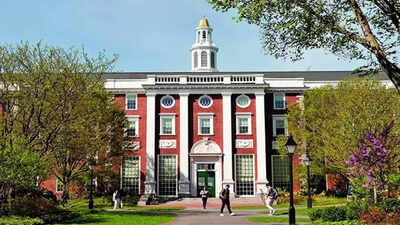
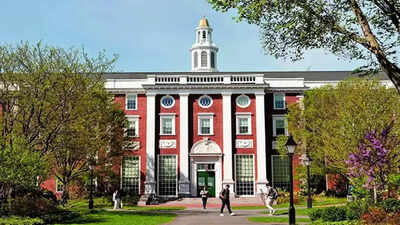
Hospital budget cuts in Boston have sharply reduced chaplaincy training opportunities, prompting the Harvard Divinity School (HDS) to explore launching its own Clinical Pastoral Education (CPE) programme, according to a detailed report by The Harvard Crimson.The student newspaper reported that Associate Dean for Ministry Studies Theodore N. “Teddy” Hickman-Maynard informed students last week that the Office of Ministry Studies is actively considering an HDS-administered CPE pathway. The exploration comes after sustained concern from students about dwindling hospital-based placements in the Boston area.
Students raise alarm over shrinking hospital placements
As first reported by The HarvardCrimson, concerns crystallised on February 9 when 73 students submitted a formal petition to the Master of Divinity faculty committee. The letter called on the school to take institutional action in response to the loss of local CPE positions.CPE serves as the primary accreditation pathway for chaplaincy. At least one CPE unit is required for board certification and typically involves supervised clinical practice in healthcare settings, paired with intensive small-group theological reflection. The Crimson noted that chaplaincy has become the fastest-growing vocational track at HDS, increasing the stakes for students seeking placements.According to the petition cited by the newspaper, major healthcare providers have significantly scaled back their programmes. Massachusetts General Hospital and Brigham and Women’s Hospital are estimated to have eliminated between 22 and 28 CPE positions. In addition, Hebrew SeniorLife has discontinued its residency programme altogether.Students argued in their letter that establishing an in-house, HDS-sponsored CPE programme would be a “logical and necessary step” to stabilise professional training, reduce reliance on hospital systems facing financial constraints, and affirm the school’s leadership in spiritual care education.
Proposal for an HDS-run certification pathway
In an email to students, quoted by The Harvard Crimson, Hickman-Maynard wrote that an HDS-run programme would allow the school to “sponsor and manage our own CPE certification pathway.” Such a model would reduce dependence on external hospital programmes and potentially expand the range of ministry contexts available for accredited training.This shift would represent a structural change in how HDS supports vocational formation in chaplaincy. Instead of relying primarily on hospital partnerships, the school could directly administer placements and certification processes, offering greater institutional control and flexibility.Students interviewed by the newspaper described the move as overdue. Kien T. Le, a third-year Master of Divinity student who completed a CPE-equivalent programme at the Dana-Farber Cancer Institute, said many students are deeply invested in chaplaincy and spiritual care but have faced narrowing options in the Boston area.Alexandra D. Potter, a second-year MDiv student, told The Harvard Crimson that limited placements have made the process particularly difficult for current cohorts. Even if the proposed changes do not benefit students already nearing graduation, she expressed hope that future students would gain from a more stable training infrastructure.An HDS spokesperson told the newspaper that the school recognises hospital-based cuts are affecting divinity students nationwide. The spokesperson emphasised a shared commitment between administrators and students to find a collaborative solution.In response to the petition, Dean Marla F. Frederick has placed spiritual care and chaplaincy training on the agenda for this year’s Dean’s Forum, the annual gathering of the dean’s advisory council and alumni. While the school has not yet outlined a timeline or concrete implementation plan, the public acknowledgement of the issue signals that leadership is formally evaluating long-term institutional reforms.As The Harvard Crimson reported, the discussion reflects broader financial pressures within healthcare systems and their downstream impact on professional religious training. For HDS students pursuing chaplaincy — a field requiring accredited clinical experience — the outcome of these deliberations could shape both immediate career prospects and the future structure of spiritual care education at the school.