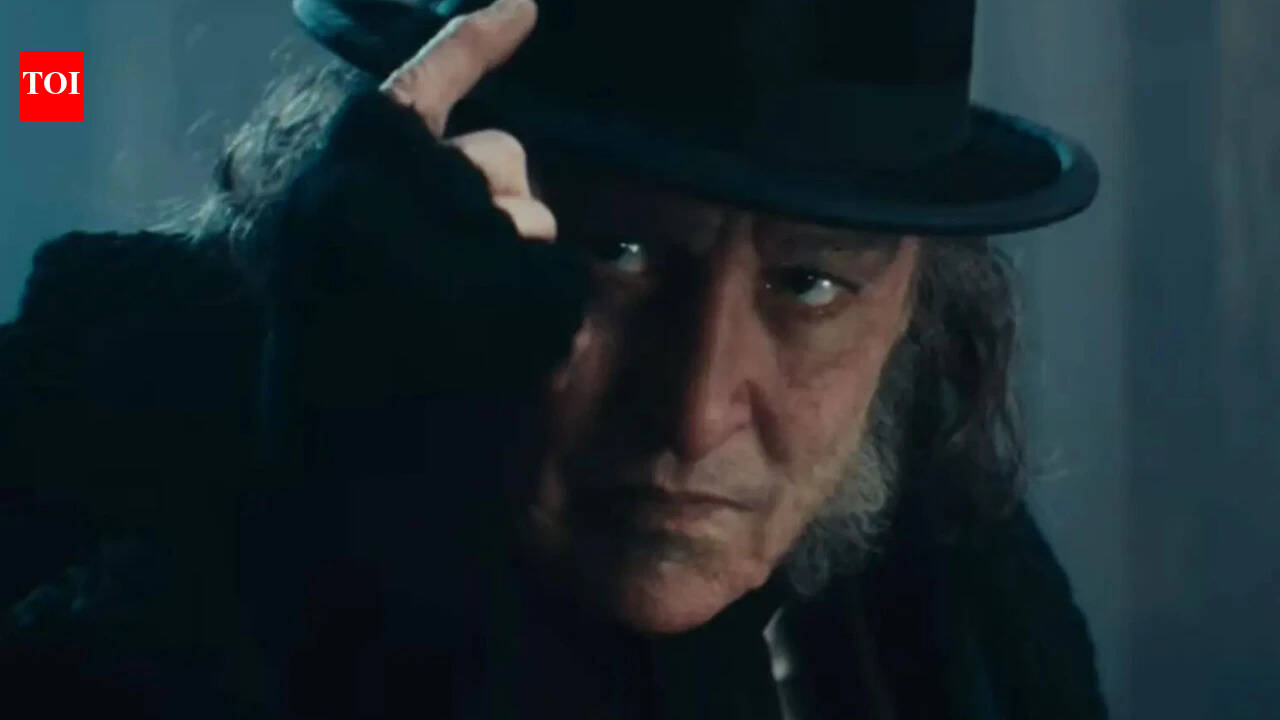
When Charles Dickens published A Christmas Carol in 1843, Ebenezer Scrooge quickly became one of literature’s most recognisable characters. He was the cold-hearted businessman who hated Christmas, refused to help the poor and famously grumbled, “Bah! Humbug!”But where did Dickens find such an unusual name?One of the most intriguing answers begins not in London, but in an Edinburgh churchyard.The character is also returning to the big screen in Ebenezer: A Christmas Carol, Ti West’s upcoming dark fantasy adaptation starring Johnny Depp, scheduled for theatrical release on November 13, 2026. But long before Scrooge became a familiar Christmas figure, there was another mystery attached to him: where did that unusual name actually come from?
The gravestone story that refuses to disappear
According to a long-repeated story, Dickens visited Edinburgh and came across a gravestone belonging to Ebenezer Lennox Scroggie, supposedly a Scottish merchant.The inscription is said to have described Scroggie as a “meal man”, an old term connected with the grain trade. The story claims Dickens misread those words as “mean man” and was struck by the combination of the name and description, as per The Victorian Web.From there, legend has it, “Scroggie” became “Scrooge” and the fictional miser was born.It is a wonderfully Dickensian story. There is just one problem: there is no solid evidence that this meeting with the gravestone ever happened.
Historians have found a major problem
Researchers have not been able to establish that the supposed Ebenezer Scroggie existed in the way the story describes him. The gravestone itself is also lost.The tale has therefore been described by literary scholars as a possible Dickens hoax or later invention, rather than an established fact. The lack of surviving documentary evidence makes it unsafe to present the gravestone story as the confirmed origin of Scrooge’s name.That distinction matters because the story has been repeated so often that it can sound like settled history.
So where could “Scrooge” have come from?
The surname may have been influenced by an older English word, “scrouge”, meaning to squeeze or press. Literary scholars have also noted the connection between the name and words associated with grasping or squeezing.There were also real-life wealthy misers who have been suggested as possible influences, including John Elwes and Jemmy Wood. That makes it possible that Dickens built Scrooge from several impressions rather than copying one particular man.
The irony is almost too perfect
Dickens ultimately made the name much bigger than any possible real-world source.In A Christmas Carol, Scrooge is confronted with his own gravestone and the future that awaits him if he refuses to change. The stone bears the words “EBENEZER SCROOGE.”The character then chooses to change his life.That ending gives the disputed name story an almost perfect twist: whether Dickens really borrowed the name from a gravestone or not, a gravestone became central to Scrooge’s transformation.And that may be the most memorable part of the mystery. The real evidence remains uncertain, but Dickens turned a name into a character so powerful that “Scrooge” eventually became a word for a person unwilling to spend money.Disclaimer: The Ebenezer Scroggie gravestone story is widely repeated but is not established historical fact. Surviving evidence does not conclusively prove that Dickens saw such a gravestone or derived Scrooge’s name from it.