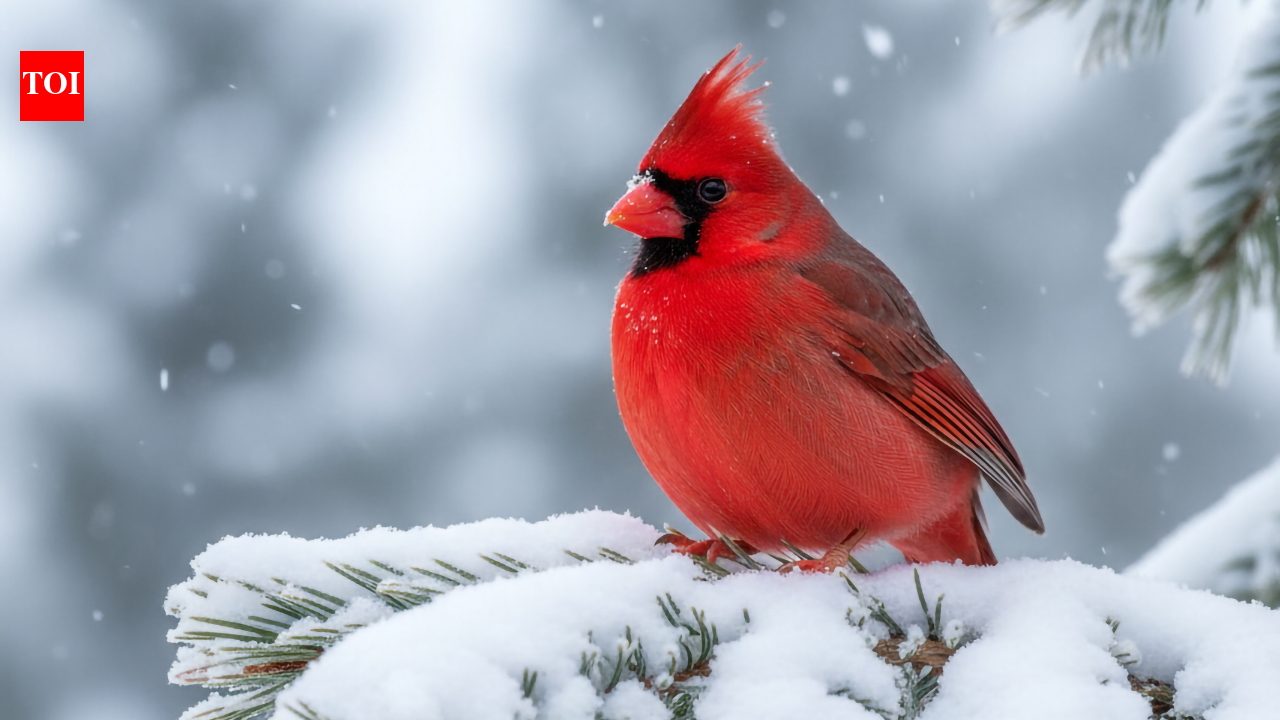
Winter has already set in, and the mornings and evenings are filled with chilled air. Soon, these subtle chills will advance into a full-fledged cool season.But have you ever imagined how avians manage to stay put through the cold season? It has no blanket, no roof, and no heater, only a bare branch under a sky full of stars. The temperature keeps falling, the wind picks up, and the sun won’t be back for many long hours. Most of us would not last an hour like that.And yet, when morning comes, the garden is full of chirping again. It almost feels like a magic trick.Let us find out what happens while the rest of us are asleep and how these furballs manage to pull this off.
Why don’t birds freeze when they sleep outside in winter?
Well, the honest answer is that some birds actually do freeze in extreme winters and are found frozen and dead in birdhouses after a harsh cold spell. But most survive, and the reasons come from research by Olav Hogstad, a professor emeritus at the NTNU University Museum in Norway, as described by Norwegian SciTech News.A Futura report explains that small animals have a large surface area compared with their size, so they lose heat quickly. They also can’t store much insulating fat, so it all comes down to the most important part and key to survival: losing less heat overnight.
But how to survive the chill while sleeping in snow?
Snow turns out to be a great blanket. According to NTNU, grouse species such as the wood grouse, black grouse, hazel grouse and willow ptarmigan shelter in snow caves or burrows, which are much warmer than sleeping in the open. Even tiny birds do it. According to Norwegian SciTech News, the 13 cm mealy redpoll digs a system of snow tunnels in extreme cold and then tunnels sideways.
Sharing body heat is another trick.
Another survival tactic is seen in Eurasian wrens, which huddle tightly in groups, and as many as 60 have been found together in England. Treecreepers also squeeze together in tree cracks, even though the birds can be quite aggressive with each other, but extreme cold makes them more tolerant of company. Great tits also fight over the best roosting spots because they don’t dig their own cavities, unlike woodpeckers.
It all starts in the daytime
Surviving the night begins at sunrise. The long-tailed tits and willow tits must gain about 10 percent more body weight to get through an 18- to 19-hour night. That is why every hour of winter daylight counts for collecting fodder.