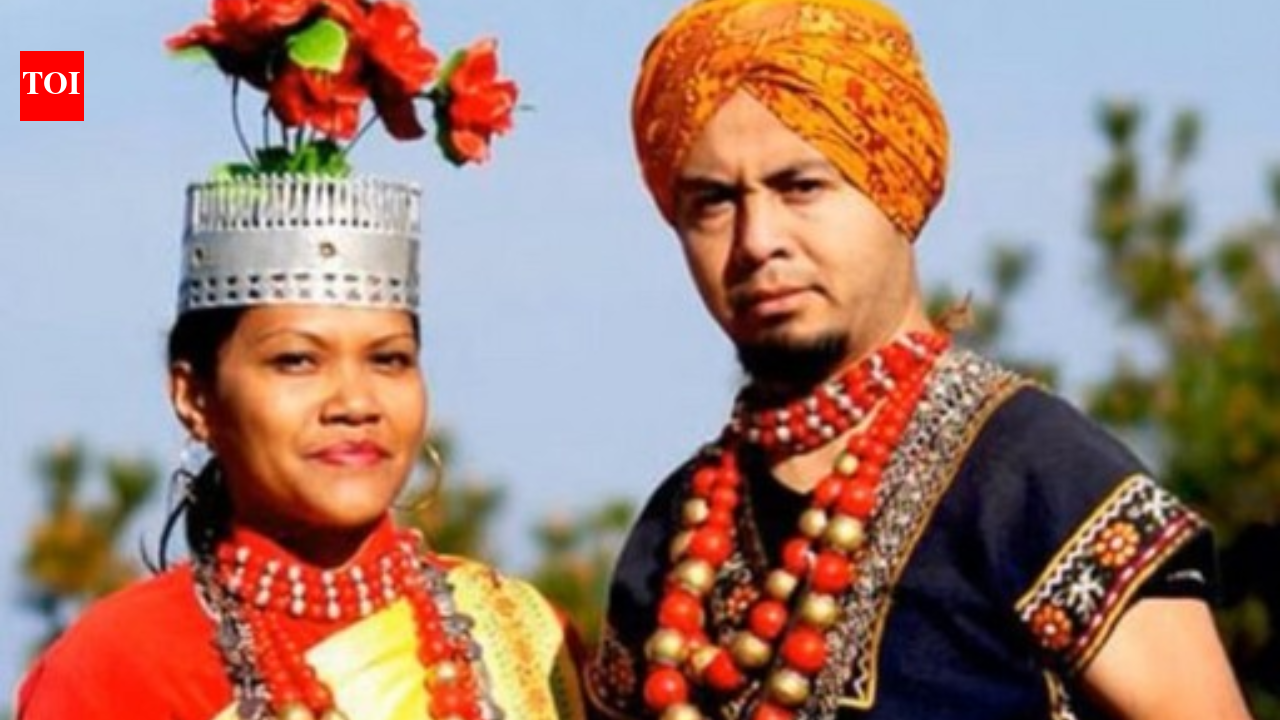
In much of India, marriage traditionally means a bride leaving her parental home and moving into her husband’s family. In Meghalaya’s Khasi community, the direction can be strikingly different: the groom moves into the bride’s home.It is not simply a quirky wedding custom. The practice is part of a much larger social system in which family lineage, clan identity and inheritance are traced through the mother. Children take their mother’s clan name, and the youngest daughter traditionally becomes the custodian of the family’s ancestral property.The Khasis are among India’s best-known matrilineal communities, and their marriage traditions offer a fascinating glimpse into a family structure that reverses many of the patterns familiar elsewhere in the country. nm
When the groom goes to the bride’s home
According to the Vivekananda Kendra Institute of Culture’s account of the Khasi marriage system, marriage among the Khasis is traditionally a bond between two different clans. Marriage within the same clan is prohibited because members are considered descendants of a common ancestral mother.The wedding itself has traditionally involved representatives from both sides, particularly the maternal uncles. The groom and his relatives proceed to the bride’s home, where the two sides conduct a formal exchange before the marriage is declared.But what happens after the ceremony is perhaps the most striking part.“The most remarkable feature of the Khasi marriage is that it is usual for the husband to live with his wife in his mother-in-law’s house,” writes Sarabha Kharbangar in the VKIC account of the Khasi marriage system.In other words, rather than the bride being absorbed into the groom’s household, the husband traditionally becomes part of the wife’s family home.Media India Group, in a 2022 feature on the Khasi community, quotes Nartiang Lei Shillong, a member of the Khasi tribe, explaining the arrangement: “Unlike in other parts of India, it is our woman, not our man, who passes down the family name to future generations.” He adds that the woman inherits and takes custody of her parents’ legacy and tribe, and if she is the youngest daughter, “her husband comes and resides in her house.”
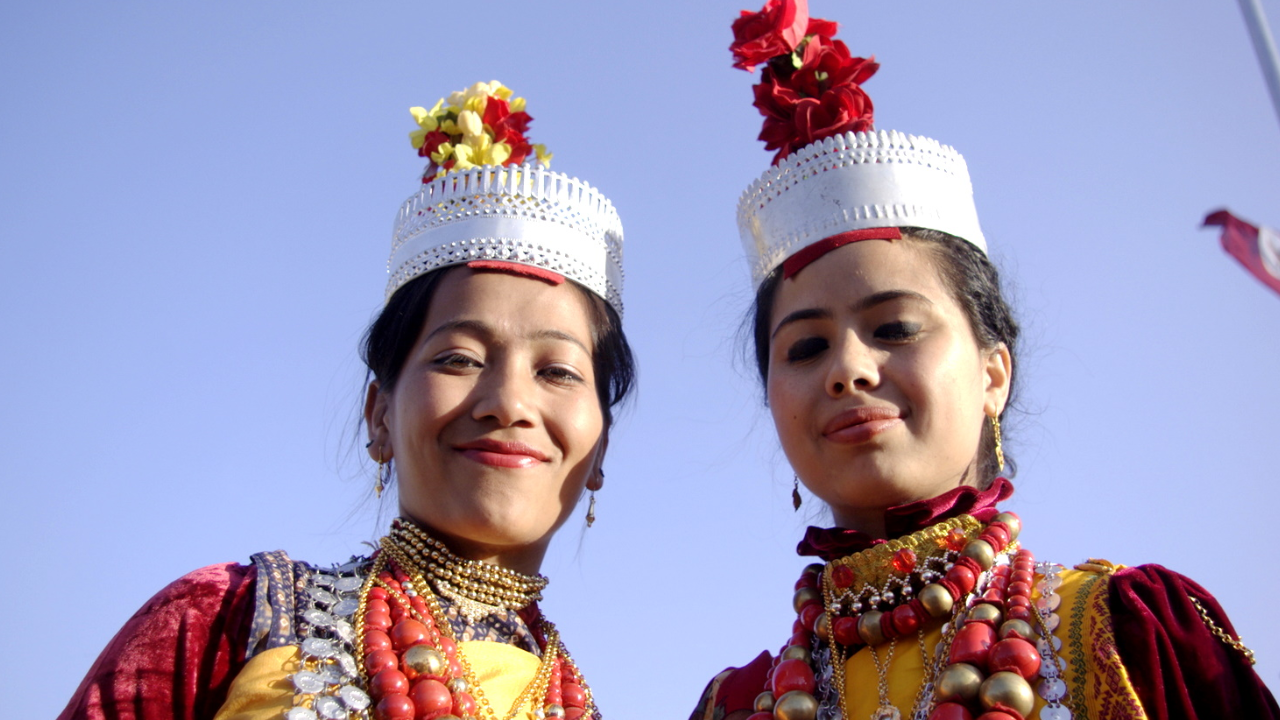
The youngest daughter, known as the khatduh, traditionally inherits the ancestral family property.
The youngest daughter has a special role
At the centre of this system is the khatduh – traditionally the youngest daughter of the family.She is not simply the person who inherits the family home. Her inheritance comes with responsibility. According to Media India Group, the khatduh becomes the custodian of ancestral land and property and takes on responsibilities associated with caring for ageing parents as well as unmarried or dependent siblings.This helps explain why the family home remains connected to the daughter even after marriage.The arrangement also means that the idea of a married couple forming an entirely separate household is not necessarily the central organising principle. The wider maternal family and clan remain important.The VKIC account describes the Ing, or family household, as a key institution of Khasi social organisation. Membership is determined through the mother, while succession follows the maternal line.
It is matrilineal – but that does not automatically mean matriarchal
The Khasi system is often described casually as a “matriarchy”, but matrilineal and matriarchal do not mean the same thing.Matrilineality refers primarily to how descent, clan identity and inheritance are organised – through the mother’s line. Matriarchy, by contrast, implies that women hold primary authority across a society’s political, social and institutional structures.A member of the Khasi community interviewed by Media India Group makes the distinction directly. “People confuse matrilineal structure with matriarchy, however, they are not the same. My tribe is not matriarchal but matrilineal,” Hep Naki Rani, a Khasi member studying at Delhi University, told the publication.And this is where the Khasi system becomes more complicated than the simple image of a society where “women are in charge”.While women traditionally have a central position in the family and control ancestral property, Khasi political and community leadership has historically remained largely male-dominated. Media India Group noted that the former rulers of the tribe passed their positions to the sons of their youngest sisters, while most government ministers and many village-level leaders were men.So a woman may inherit the family home while men continue to occupy important positions in politics, religion or community affairs.
The man’s role does not disappear
The Khasi marriage system also does not mean that the husband becomes an outsider in his wife’s family.The VKIC account describes the father as the executive head of the wife’s family and the breadwinner responsible for the welfare of the household. At the same time, he does not inherit his wife’s ancestral property or participate in her clan’s religious ceremonies in the same way as members of her maternal line.His position is therefore different rather than simply absent.The system is built around overlapping relationships: a man belongs to his own maternal clan while becoming a husband and father within his wife’s household. His maternal uncle, meanwhile, has an important role within his own clan.This creates a family structure in which the biological father is important, but the maternal line remains the foundation of identity and inheritance.
Why some Khasi men have questioned the system
The arrangement has also generated a debate within the community.A BBC Travel report on the Khasi community highlighted the existence of a men’s rights movement that has questioned aspects of the matrilineal system. A related report by DW described the organisation Synkhong Rympei Thymmai (SRT) as a group campaigning for changes to the matrilineal system and said some Khasi men believe the existing customs disadvantage them.Keith Pariat, a former president of the SRT, was quoted by DW as saying: “Women are everywhere, in the bazaars, at the government offices.”The community has a system in which women occupy a distinctive position in property, lineage and family life, but that does not necessarily translate into women dominating every sphere of public authority.
A tradition shaped around the mother’s line
The origins of Khasi matriliny are also debated.Media India Group notes different explanations, including theories connected to the community’s historical circumstances and the difficulty of establishing paternity in an earlier social structure. Local accounts have also linked the system to periods when Khasi men went to battle and women remained responsible for the household.Whatever its origins, the structure has survived into modern times, even as Khasi families and marriages have changed.The VKIC account notes that both arranged and love marriages are now part of Khasi society, while traditional rules around clans and marriage remain significant. Christian families have also adopted forms of marriage influenced by Christianity.The result is a community where one familiar question after marriage – “Where will the bride go?” – can have a very different answer.In a traditional Khasi family, it may be the groom who packs his belongings and goes to the bride’s home.But the bigger story is not simply about a husband moving into his wife’s house. It is about an entire understanding of family in which the mother’s line carries the name, the clan and the inheritance, while marriage connects two families without necessarily shifting a woman away from the home and lineage into which she was born.