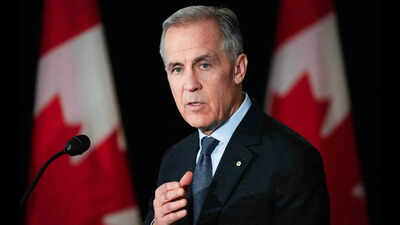
Canada suspended trade talks with the United States on Saturday, citing that Washington had pushed for too many concessions in the final stages of negotiations, prompting Ottawa to recall its negotiators back home. Summing up Ottawa’s position, Prime Minister Mark Carney said, “We are masters in our own home.”He added that though the two sides had appeared to be moving towards a mutually beneficial agreement earlier in the week, in recent days, the US introduced new terms that Canada considered unfair and economically unviable.“While we believed earlier this week that we were moving towards a mutually beneficial agreement, in recent days, the United States proposed new terms that were uneconomic, unfair, and undermined the net benefits for Canada and called into question the reliability of any deal. In short, they asked too much, and they offered too little,” the Canadian PM said.Now, the United States is imposing 50% tariffs on $20 billion worth of Canadian goods, while Canada has set September 8 as the start of its retaliatory measures as Carney vowed to Washington ‘dollar for dollar’
US-Canada deal ends in stalemate — Here’s why
US demands went beyond tariffsCarney said that the US demands raised broader questions about Washington’s commitment to a true economic partnership with Canada. “More fundamentally, the cumulative effect of US demands revealed the limits of their commitment to a true economic partnership,” he said.Restrictions on other trade dealsThe US introduced last-minute efforts to limit Canada’s ability to negotiate trade agreements with other countries. “The US introduced in the last hours, efforts to restrict our ability to have other trade deals,” Carney said.Pointing to the nation’s new deals accomplished over the past year and its plans to expand market access through free trade, Carney said, “You heard me say a moment ago what we’ve accomplished in the last year: 20 new deals, economic and security partnership, the prospect of doubling our market access because we believe in free trade,” he said.Carney said the US had added last-minute terms that would have reduced tariff relief for Canadian-made vehicles, restricted Canada’s ability to strike trade deals with other countries and weakened protections for language, culture and sovereignty.Restrictions on languageCarney said Washington introduced changes that included threats to the French language, Quebec culture and Canadian culture.“This was not our choice. We were ready and close to having a comprehensive agreement that would be fair to both countries. But they made changes, including threats on the French language and Quebec culture and Canadian culture. That is not acceptable. That would never be acceptable.”He added, “They had language that they wanted to restrict, unacceptable,” and said Canada would continue to defend the French language and culture in the country.Already offered significant concessionsOttawa had been prepared to drop its remaining retaliatory tariffs on steel, aluminium and autos if the US substantially reduced its own tariffs. Canada was also willing to encourage provinces to restore US alcohol sales. But Carney said the final US demands went too far, “They asked too much and offered too little,” he added.US using economic integration as a weaponAfter negotiations broke down in Washington, Carney suspended the talks and directed Canadian negotiators to return to Ottawa. He also accused Washington of using “economic integration as a weapon” and said “its signature was written in pencil”.Describing the new American tariffs as an attack, he said that Canada had the reserves, resilience and plan to respond.Carney said Ottawa would respond with targeted tariff protection for industries exposed to the new US duties, including some steel products, as well as the dairy, appliance, agricultural equipment, pulp and paper and electronics sectors.The suspension came after negotiations between the two countries broke down in Washington late Friday, with both sides blaming the other. The fallout deepened a trade war between the two historic allies and was followed by new tariffs from the United States and plans for retaliatory measures from Canada.No further talks were planned, with the breakdown raising concerns over trust between the two countries.
What the US said
US chief trade negotiator Jamieson Greer said Washington had been compelled to act after a year of retaliation by Canada.“We’ve said enough, and so we’ve taken countermeasures. Our interest is in protecting American workers and protecting American supply chains,” the US trade representative told “Fox & Friends Weekend.”He said the Republican administration had offered to cut tariffs on steel, autos and lumber, “things that are sensitive for them. And they’ve always had the best deal, and they still would have an even better deal, but they didn’t want that.”As a result, he said, “We’re moving forward with measures that respond to Canadian retaliation.”The breakdown marked a sharp reversal from two days earlier, when officials from the two countries had sounded optimistic on moving towards a compromise.The developments have also raised questions over the future of the North American trade agreement covering the United States, Canada and Mexico, which is crucial to industries in all three countries.Carney said the breakdown was “certainly not good news” for the review of that agreement and that the failed negotiations had given Canada “a new perspective” on what Washington wants from the broader economic relationship.
US-Canada trade portfolio
The latest trade dispute comes against the backdrop of a relationship that has traditionally been cooperative, despite years of disagreements over issues including Canadian softwood lumber imports and US access to Canada’s protected dairy market.The new US tariffs are expected to affect about 5% of what Canada ships to the United States each year, including products ranging from hockey sticks to tongue depressors. The two countries sold each other $880 billion worth of goods and services last year, while nearly 72% of Canada’s goods exports went to the United States.That made finding a compromise important for both sides.The tariffs were initially due to take effect at 12:01 am Wednesday, but Trump extended the deadline by three days to allow talks to continue. The countries ultimately failed to reach an agreement in time.The dispute also reflects how sharply the relationship has changed under Trump, who has made tariffs the centrepiece of his second-term economic agenda. Last year, he imposed double-digit import taxes on almost every country, justifying them by declaring the long-standing US trade deficit a national emergency.Back in February, the US Supreme Court ruled that he had overstepped his authority, striking down the trade penalties and setting the stage for the federal government to pay refunds to importers. The administration subsequently turned to other legal authorities to justify tariffs.For Canada, Trump invoked Section 338 of the Tariff Act of 1930, a rarely used Depression-era provision allowing tariffs of up to 50% against countries deemed to discriminate against US businesses.