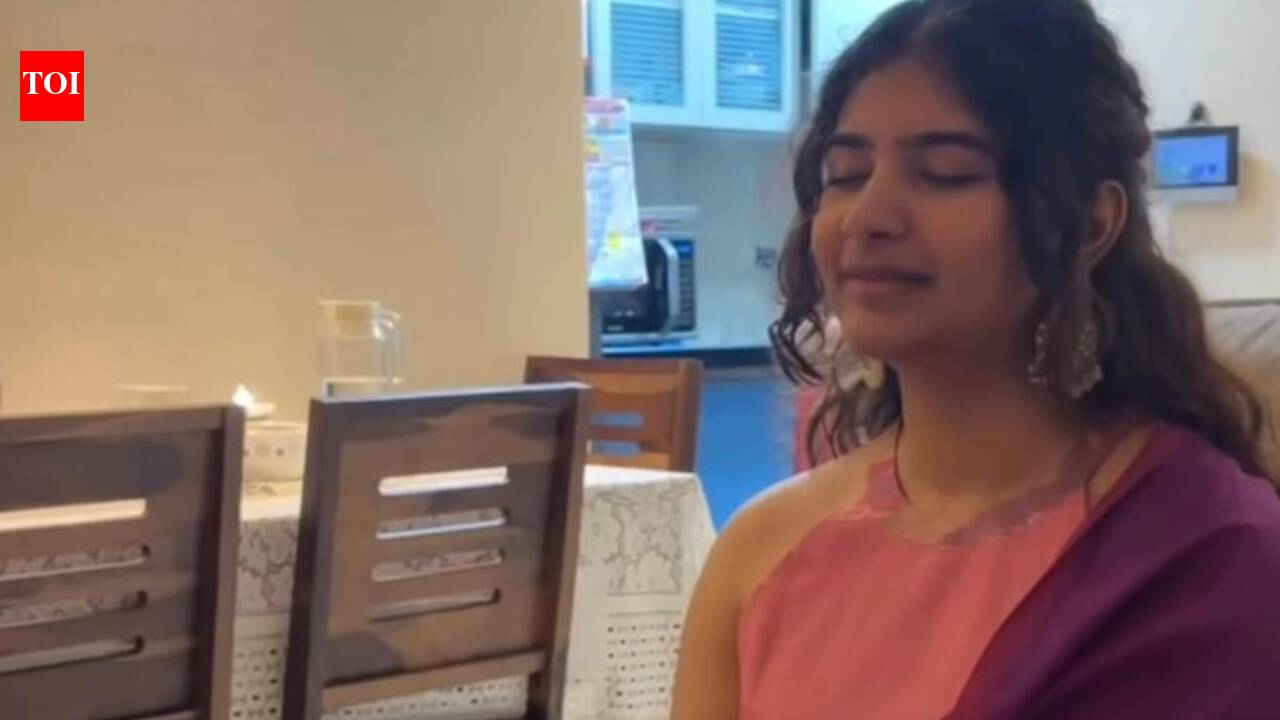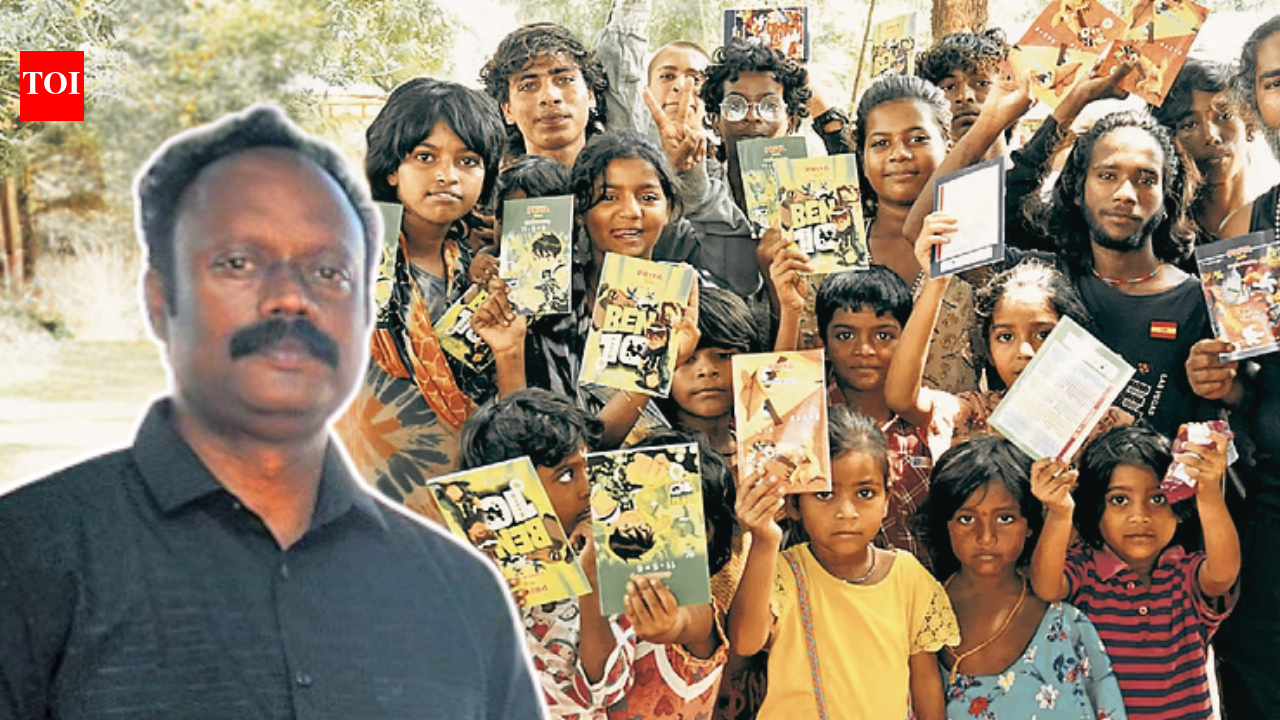
A six-year-old girl carefully counts from one to 10 in Tamil, reading from her mathematics book as her family watches. Government school teacher Saravanan stands nearby, pleased to see her progress. For him, the moment is a reminder of why he carries books to children in tribal settlements across Tamil Nadu’s Tirupattur district. For the past few years, Saravanan, 44, has been taking books to children in remote settlements on his motorcycle. What began as a plan to distribute a collection of children’s books has grown into a mobile library, with a larger goal of encouraging children to continue their education.As reported by The New Indian Express, which reported on his work on October 12, Saravanan teaches at a government school and has spent 20 years in the profession. He comes from Ambur in Tirupattur district and has received several recognitions for his contribution to education. In 2025, he was among five teachers from Tamil Nadu shortlisted for the National Teachers’ Award.
How a gift of 250 books led to a mobile library
The idea took shape after the National Book Trust of India gifted Saravanan 250 children’s books worth Rs 10,000 in recognition of his work. His wife, Shalini, who is also a government school teacher, suggested donating the books to children in a nearby Narikuravar settlement. Some of her students came from the community, whose members continue to face discrimination and social exclusion. “I decided to take the books to these children,” Saravanan told The New Indian Express. He initially planned to distribute the books, but the children’s enthusiasm made him think about how he could reach them more regularly. Instead of expecting children to travel to access books, he decided to take the books to their settlements. He began carrying a small box of books strapped to his motorcycle and travelling to tribal settlements. Over time, the motorcycle became a familiar sight for children waiting for their next visit.
Children gather around his motorcycle for books
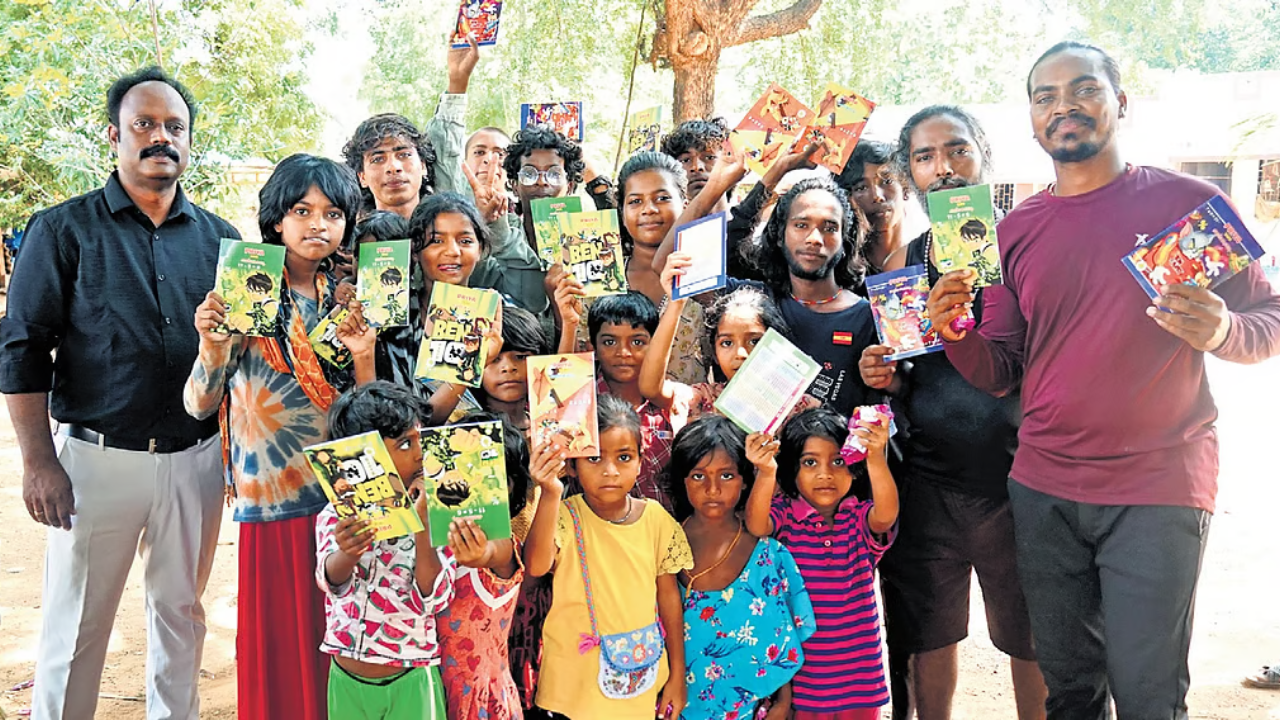
Image credit: The New Indian Express
At the Periyankuppam settlement, children run towards Saravanan when they hear his motorcycle engine and horn. They gather around his black Honda Dio even before he has stopped, eager to see what he has brought. The collection includes mathematics notebooks with colourful covers featuring characters such as Ben 10 and Angry Birds, along with Tamil storybooks from the Thumbi series. During one visit, a child approached him and asked whether he had any storybooks. Saravanan looked through his box and handed her a Tamil storybook.For him, the purpose of the mobile library is not limited to helping children practise reading or complete schoolwork. He wants them to discover different subjects, stories and experiences through books. “The idea is to stretch their horizons a bit further each time,” he told The New Indian Express. However, he sees distributing books as only the first step. The larger challenge is ensuring that children remain in school and have the support they need to continue learning.
Distance and social restrictions remain barriers to education
According to The New Indian Express, more than 13 children aged six to 14 attend the government primary school in Periyankuppam. Around 10 others are between 15 and 18 years old. A few attend the Concordia government-aided school in Ambur, while others have dropped out. For some families, reaching school was a major difficulty. Sakthivel, a resident of the settlement, told the newspaper that children once had to walk around 5 km to school, and the distance contributed to dropouts. Volunteers have since arranged an auto to transport the children.Girls face additional restrictions. Madhubala, Sakthivel’s wife, described conservative attitudes within the community that limit women’s freedom. She told The New Indian Express that women were not even allowed to sit with their legs crossed. Despite these restrictions, she hopes her daughter will have more opportunities to study and continue her education after puberty. “But my daughter will see that change,” she said. Her hope reflects a wider challenge Saravanan wants to address: helping children and parents understand the value of education and creating conditions in which young people can continue studying.
Teacher urges two boys to return to school
During a visit to the settlement, Saravanan spoke to Thavasi about his schooling. The boy told him that he had stopped attending school a year earlier. He had been in Class 9 but had stopped going because his friend Manikandan was no longer attending. Saravanan urged both boys to return to school, stressing the importance of Class 10 and asking whether they would study if he helped enrol them in the next academic year. “Yes, sir, we will study,” the boys replied, according to The New Indian Express. The conversation highlights the work Saravanan hopes to do beyond bringing books to children. He wants to encourage those who have left school to return and help families recognise the importance of completing their education.
His next goal is a permanent library
Saravanan says the community still needs sustained support. His immediate plan is to work with younger members and parents to build greater awareness of education. He also hopes to establish a physical library in the settlement where children can read and learn in a safe space. The proposed library would also provide career guidance to help children think about their future opportunities. For now, he continues to make his visits with a box of books strapped to his motorcycle. As he prepares to leave Periyankuppam, he checks on the children’s schooling and encourages them to keep studying.