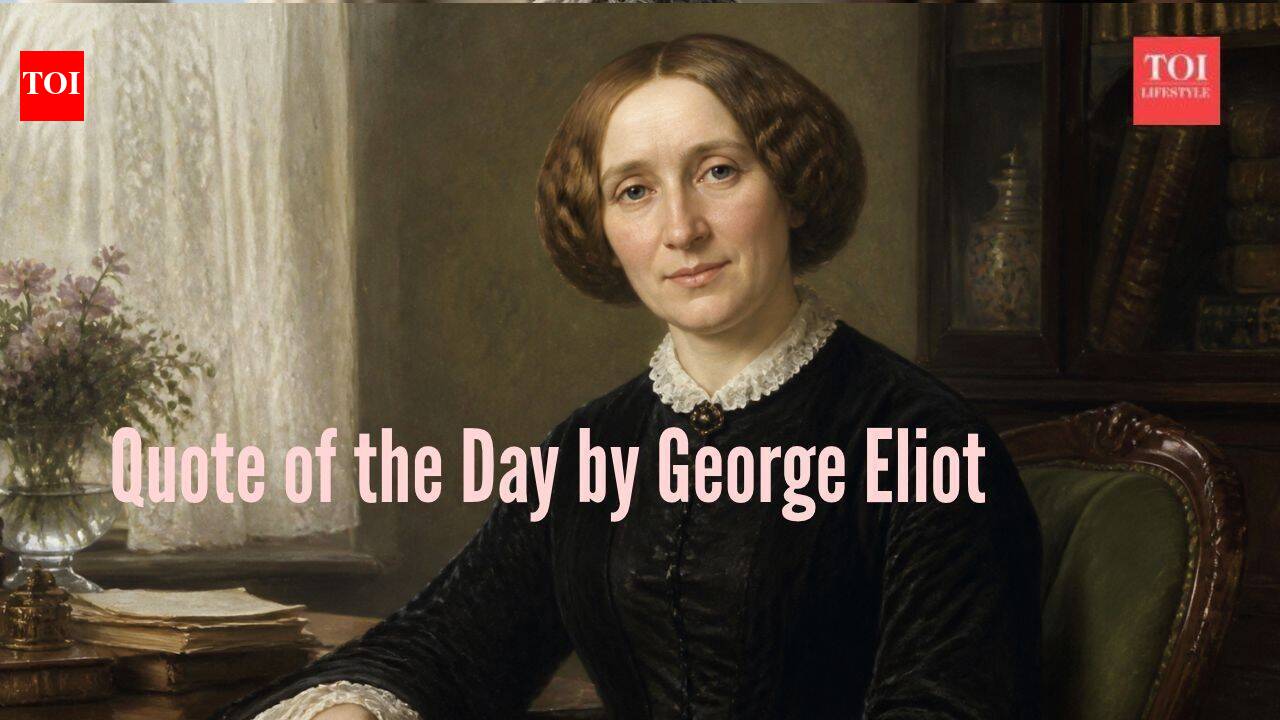
George Eliot was one of the greatest novelists of the Victorian era, a woman who defied the conventions of her time and changed the way literature looked at human relationships, morality, society and the complex nature of the human mind. The amazing thing about George Eliot was that she was not just a storyteller. She was a philosopher. Everyday. In her writing, she explored why people do what they do, how their choices impact others and how the seemingly insignificant choices can impact the trajectory of an entire life. More than a century after her death, her insights into human nature remain strikingly relevant, and her work continues to be read.George Eliot was the pen name of Mary Ann Evans who was born in Warwickshire, England on November 22, 1819. She comes from a fairly comfortable middle-class family. The daughter of estate manager Robert Evans, her early education was heavily influenced by her exposure to books, religion and intellectual discussion. Unlike many women of her generation, Evans had a good education. She went to boarding schools, where she studied literature, languages and religion. She was a very curious child, who acquired a great taste for philosophy, theology and classical literature.But her intellectual journey was anything but conventional. In her young adulthood she began to question the religion in which she had been raised. She found herself interested in rational thought, philosophy, and the link between faith and morality. These questions would become important themes in her later novels. Her mother’s death in 1836 resulted in her taking on household responsibilities and, eventually, moving with her father to Coventry. Here she was introduced to a progressive intellectual circle that urged her to challenge established ideas.In 1851, she moved to London and became assistant editor of the influential intellectual journal the Westminster Review. She translated philosophical works, wrote essays and conversed with some of the leading thinkers of her day.Her connection with the intellectual community helped her to create a unique literary voice.Why did she write in a man’s name?One particularly interesting element of George Eliot’s life is her adoption of a male pen name. In the 19th century women writers were often evaluated differently from men. Their work was often dismissed as sentimental, romantic or intellectually shallow. There was a lot of prejudice against women who wanted to take on serious philosophical, political and social questions. Mary Ann Evans sought to have her novels judged on their intellectual and literary merit, rather than on the basis of assumptions about her gender.So she took the name of George Eliot. ‘George’ was said to be chosen partly because of George Henry Lewes, with whom she lived, and ‘Eliot’ was the name she took as her literary pseudonym. Her choice also helped to distinguish her serious fiction from the popular romantic novels associated with some women writers of the period. In time, her identity became well known, but she was still recognised by her literary name.Her connection with George Henry LewesAnother significant part of Eliot’s life was her unorthodox relationship with philosopher and writer George Henry Lewes. They met in 1851 and formed a close intellectual and emotional partnership. Lewes was married already, but his marriage was complicated by circumstances which made a conventional separation difficult. Consequently he and Eliot lived together without marrying.Victorian society valued marriage and conventional morality very highly, and their relationship was socially much disapproved of.But Lewes did encourage Eliot’s literary ambitions and supported her in writing fiction. Their relationship was one of intellectual companionship, of love and respect for each other. The personal life of Eliot is especially interesting, as she wrote so much about marriage, emotional expectations, social conventions, and the problems of intimate relationships. She knew that people didn’t usually live by the moral rules that society set forth.Eliot married John Walter Cross after Lewes’s death in 1878. She died on December 22, 1880 at the age of 61.Quote of the Day“Marriage is so unlike everything else. There is something even awful in the nearness it brings.” It is one of the most memorable quotes of George Eliot from Middlemarch. She captures a paradox at the heart of intimate relationships: the very closeness that makes marriage beautiful can also make it frightening, uncomfortable and, at times, deeply challenging.Marriage is unique from other relationships in the sense that it puts two people very close together. Friends may spend a few hours together, colleagues may have professional responsibilities, even family members may live separate lives. But marriage often brings two people into the minutest details of each other’s being. They see each other not just at their best, but when they are tired, irritable, insecure, disappointed, vulnerable or emotionally exhausted. There’s not much room for the elaborate facade that people so often put on for the outside world.That’s what is so special about marriage and so unnerving in its intimacy. When people know us well, they start to see the parts of us we might want to hide. They study our habits, our fears, our weaknesses, our contradictions, our emotional triggers. They can smell our moods before we have words for them. This kind of familiarity can also be a beautiful sense of belonging, but it can also leave us feeling exposed.Eliot’s use of the word ‘awful’ is especially interesting. She’s not necessarily saying that marriage is terrible. She’s pointing to something overwhelming about the intensity of being so closely connected to another human being. There is something of emotional magnitude about the word, something that can be both inspiring and unsettling. It’s not always easy to be truly known by another person. It means giving up some privacy, independence and emotional control.Psychologically there is also a deeper aspect to this observation. Intimacy has expectations. We expect our partners to understand us, to see our needs, to respond to our emotions. But no two people see the world in exactly the same way. You can love someone with your whole heart and not understand them. They might have varying interpretations of silence, differing views on daily choices or entirely divergent ideas on affection, responsibility and companionship. As they get closer, these differences can seem to matter more.But maybe this is where the real work of marriage starts. Love isn’t just about finding someone with whom everything is easy. It’s about learning to live with another person’s individuality, without always trying to change it. It is about accepting that the person sleeping next to you has an inner life you may never fully comprehend.Eliot’s observation also challenges the romantic notion that proximity automatically breeds harmony. Sometimes the people we are closest to are the ones that hurt us the most, because their words and actions mean so much. A casual comment from a stranger may be forgotten in minutes, but the same comment from a spouse may linger for years. Relationships have power through emotional proximity, but that’s also what makes them vulnerable.