

Singapore’s government has announced it will raise the annual salaries of its ministers and other office holders, including Prime Minister Lawrence Wong, who was already the highest-paid political leader in the world before this increase. According to a press release from Singapore’s Prime Minister’s Office (PMO), Wong’s annual pay package will rise nearly 64 percent, from S$2.2 million (about $1.7 million) to S$3.6 million (roughly $2.85 million). That works out to an increase of around S$1.4 million, or about $1.1 million, in his annual pay. Wong has said he will donate the entire pay increase to charity over the next five years.
Why now, and why so much
This marks the first increase in ministerial salaries in Singapore in 15 years, with the last adjustment happening back in 2012, when ministers actually took a 36 percent pay cut in response to public discontent over their earnings at the time. Wong told Parliament that raising ministers’ pay was necessary to attract better talent into public service, pointing out that the gap between political salaries and private-sector executive pay has widened significantly in recent years. He acknowledged that it would have been “easier politically” to simply leave salaries unchanged, but said doing so wouldn’t have been the right call given how much salaries across the private sector, civil service, and judiciary have grown since 2012.The government has also long argued, as it did again this time, that paying ministers competitively helps deter corruption, a rationale Singapore has used for decades as part of what it calls a “clean wage” model, meaning salaries are transparent and not supplemented by hidden perks. Under the new structure, the changes won’t apply all at once. Ministers will receive an initial one-off adjustment of up to 9 percent starting October 15, with the rest phased in gradually depending on individual performance. By the end of the current government’s term, most junior ministers are expected to earn around S$1.35 million, with the possibility of moving higher based on performance.
How Wong compares to other world leaders
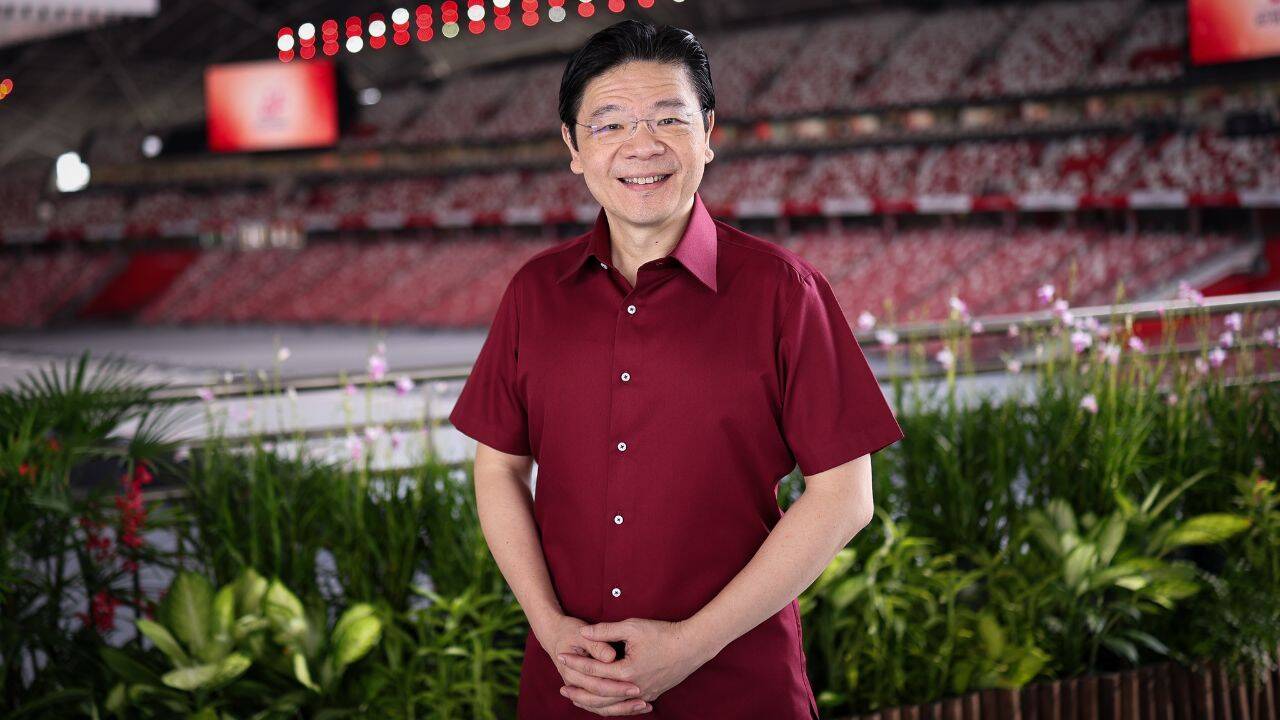
Even before this raise, Wong’s pay dramatically outpaced every other world leader. According to CNBC and ABC News, his new S$3.6 million package is more than seven times the $400,000 annual salary of US President Donald Trump, and more than four times that of the Swiss president, who earns around $842,000. It also comfortably surpasses Hong Kong’s Chief Executive, the world’s second-highest-paid political leader, whose annual pay has been placed at roughly $719,000 to just over $1 million depending on the source and exchange rate used.Closer to home in the UK, Prime Minister Andy Burnham, who took office in July 2026 succeeding Keir Starmer, earns a fraction of Wong’s salary, with the UK Prime Minister’s official pay generally cited at around $230,000 annually. In fact, reports note that Wong’s new package alone is worth more than the combined statutory salaries of the leaders of the US, Switzerland, Australia, Canada, South Korea, and New Zealand put together.
Not everyone is convinced
The announcement hasn’t gone down smoothly with everyone in Singapore. Wong himself acknowledged in Parliament that political salaries remain a “difficult and emotive” topic, noting that the amounts involved are far higher than what most citizens earn, which is exactly why people scrutinise them so closely. That scrutiny has been especially sharp given the current economic backdrop. Singapore’s median gross monthly income for fully employed residents stood at around S$5,775 (about $4,300) in 2025, and the country is currently dealing with retrenchment levels at a five-year high, alongside growing public anxiety over job security and the rising cost of living. Against that backdrop, online reaction has been mixed, with some social media users, particularly on Reddit, calling the pay hike “tone deaf,” while others argued the increase would be justified if ministers step up and navigate the country’s current economic challenges more effectively.
A raise that reinforces an already wide gap
Whatever the public reaction, one thing is clear: the gap between Singapore’s political salaries and those of most other democracies is only getting wider. For a country that has long defended high public-sector pay as a tool against corruption and a magnet for talent, this latest increase doubles down on that philosophy, even as it lands at a moment when many ordinary Singaporeans are feeling increasingly squeezed.