Aluminium foil has become something of a viral fixture in home hacks lately, showing up everywhere from pigeon-proofed balconies to kitchen drawers. But two of its most talked-about “behind the appliance” uses actually land on completely opposite ends of the usefulness spectrum, and mixing them up could leave you either wasting your time or missing out on a genuinely handy trick. Foil behind a radiator sounds like smart, budget energy-saving logic, and foil behind a stove sounds like a straightforward cleaning shortcut, but only one of these actually delivers on its promise the way people expect. Here’s the real difference between the two, and why the physics involved matters far more than the hack itself.
The radiator theory sounds solid, and technically, it is
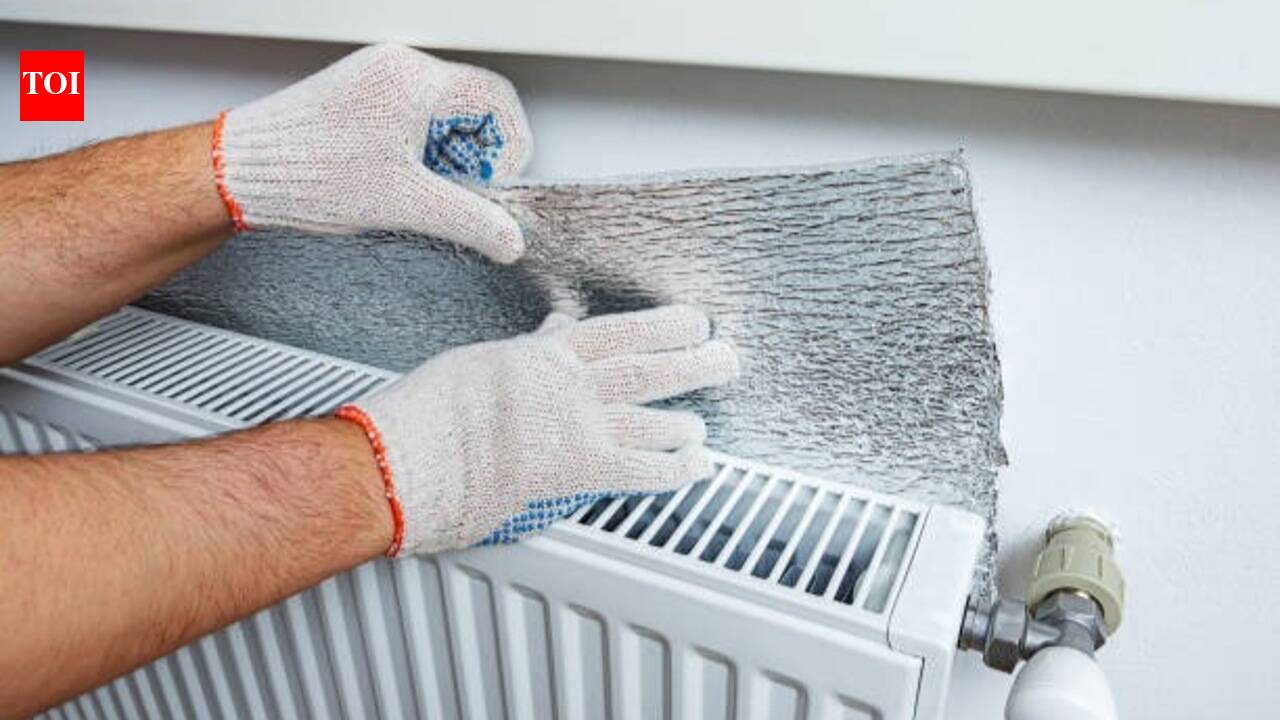
The underlying idea behind foil-behind-radiator isn’t illogical; radiators genuinely do lose some heat backwards into the wall behind them, especially if that wall is external and poorly insulated. Purpose-built radiator reflectors, thin sheets of foil backed by proper insulating material, are specifically designed to bounce that radiant heat back into the room instead of letting it seep outward, and independent testing has shown they can meaningfully cut heat loss through an uninsulated external wall, in some cases by close to half. On paper, the concept holds up perfectly well.
Where kitchen foil specifically falls apart
The problem isn’t the theory; it’s reaching for the wrong material to execute it. Ordinary kitchen foil is thin, fragile, and tears or crinkles easily, and for radiant reflection to actually work, the foil needs to stay flat and maintain a consistent air gap between itself and the radiator, something plain foil struggles to hold onto for long. Insulation experts have been fairly blunt about this: standard kitchen foil lacks both the thickness and the specialised design of proper radiator reflectors, meaning a significant portion of the heat still gets absorbed by the wall regardless of the foil sitting there.
It also depends entirely on which wall you’re dealing with
Even with a decent reflector product, this trick only genuinely helps in specific circumstances, namely when the radiator sits against an external, uninsulated wall where real heat loss is actually happening. If your radiator is mounted on an internal wall, between two heated rooms, there’s very little heat genuinely escaping in the first place, which means even a well-fitted reflector has almost nothing meaningful to reflect. Slapping foil behind every radiator in the house regardless of wall type is largely wasted effort, kitchen foil or not.
Now, the kitchen stove version is a different story entirely
Lining the wall or backsplash area directly behind your stovetop with foil isn’t about heat physics at all, it’s simply a disposable barrier catching oil splatters and food residue before they hit the wall. Unlike foil placed on or around an active burner, which genuinely does carry fire and ventilation risks, foil applied to the wall behind the stove sits well clear of any open flame, meaning none of those safety concerns apply here. It’s purely a cleaning shortcut, not an attempt to interact with heat or combustion in any way.
Why this version of the hack actually earns its popularity
Cooking splatters, especially from frying or high-heat sautéing, tend to land on the wall directly behind the stove more than almost anywhere else in the kitchen, and that grease has a habit of baking on and becoming genuinely stubborn to scrub off over time. A sheet of foil taped or pressed against that specific patch of wall means you’re peeling off and replacing a disposable layer every so often instead of scouring tile or paint repeatedly. It’s a low-tech, genuinely effective solution precisely because the job it’s doing, catching mess, is exactly what foil is naturally good at.
The real lesson buried in both hacks
Line them up side by side, and the difference comes down to what each hack is actually being asked to do. Behind the radiator, foil is being asked to perform a genuine physics job, reflecting radiant heat, that it’s simply too flimsy and unstable to do reliably compared to purpose-built alternatives. Behind the stove, it’s just being asked to sit there and catch mess, a job any sheet of foil handles perfectly well regardless of thickness or air gaps. Not every “behind the appliance” foil hack is created equal, and knowing which category a trick falls into is really the whole trick.If you’re chasing lower heating bills, your money and effort are better spent on a proper radiator reflector panel rather than a roll of kitchen foil. But if it’s grease-stained tiles behind the stove bothering you, foil remains a genuinely smart, low-cost fix, no caveats required.
Disclaimer:
This article is intended for general informational purposes only. Do not allow foil to come into direct contact with a hot radiator surface, and keep foil-lined radiators out of reach of young children and pets to avoid burns. When lining the wall behind a stove, keep foil well clear of any burner, flame, or heating element; foil placed on or around an active gas burner can pose fire and ventilation risks and is not recommended.